Honda Accord Maintenance Schedule Guide for Kansas Drivers
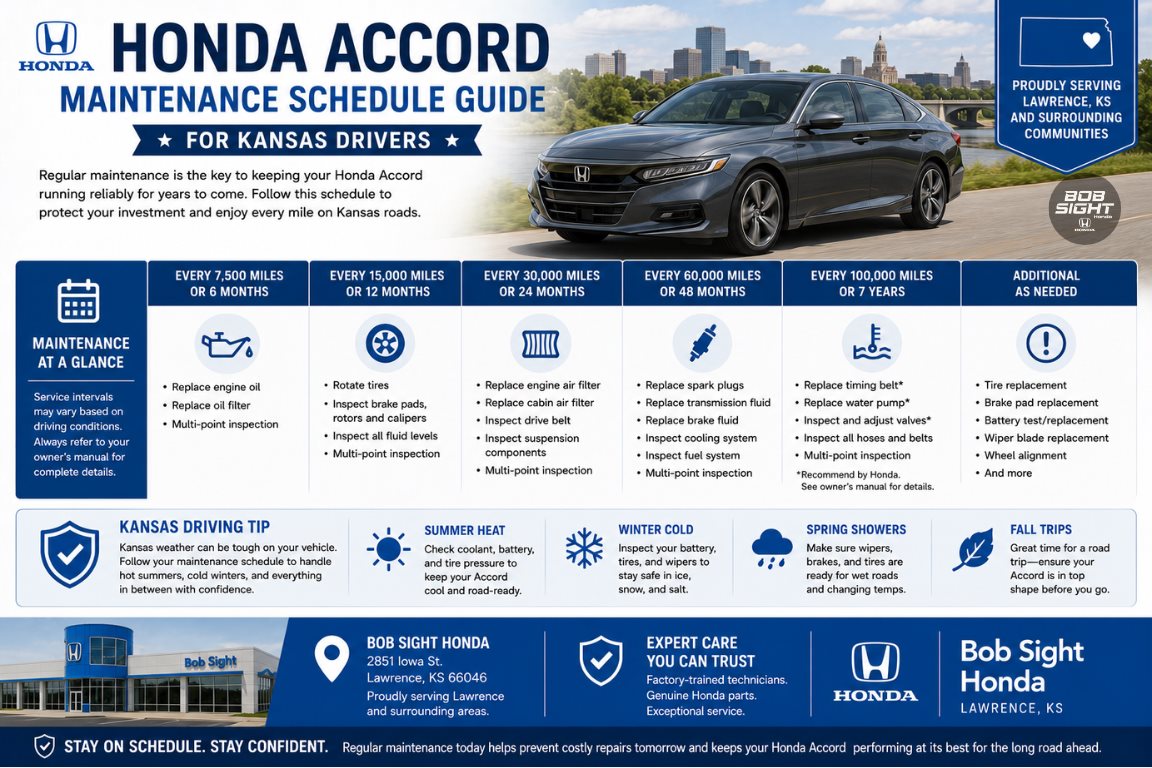
Schedule Honda service at Bob Sight Honda in Lawrence, KS
Honda Accord maintenance schedules are one of the most important tools for protecting long-term reliability, fuel efficiency, and daily driving performance across Lawrence, Topeka, Eudora, Baldwin City, and the greater Kansas City Metro. Drivers throughout Northeast Kansas rely on the Honda Accord for commuting, family transportation, college travel, and highway driving, which makes consistent maintenance critical for long-term ownership success. From hot Kansas summers to icy winter mornings on K-10 and I-70, changing weather conditions place real stress on engines, brakes, batteries, tires, and fluid systems. Following the correct Honda Accord maintenance schedule helps Kansas drivers avoid unexpected repairs while keeping their sedan dependable for years.
The Honda Accord has earned a strong reputation for longevity, comfort, and low ownership stress, but even reliable vehicles require proper care over time. Routine oil changes, brake inspections, tire rotations, transmission service, coolant maintenance, and battery testing all work together to preserve vehicle performance and safety. Drivers who skip recommended maintenance intervals often experience reduced fuel economy, uneven tire wear, brake issues, and premature component failure. That is why many local drivers trust the certified team at Bob Sight Honda in Lawrence, Kansas for factory-recommended maintenance guidance.
Whether you commute daily to Kansas City, drive around the University of Kansas campus, or frequently travel between Douglas County and Topeka, understanding your Honda Accord maintenance schedule can help you make smarter ownership decisions. This guide explains what services matter most, how Kansas weather impacts maintenance timing, and what local drivers should watch for throughout the year.
In This Guide You’ll Learn
This Honda Accord maintenance guide covers the most important service and ownership topics Kansas drivers should understand before scheduling maintenance.
- How often to service a Honda Accord in Kansas driving conditions
- Why seasonal weather impacts maintenance timing
- What Honda Maintenance Minder codes actually mean
- When to schedule oil changes, brake service, and tire rotations
- How highway commuting affects Accord maintenance intervals
- What long-term Honda Accord ownership planning looks like
- Why certified Honda service matters for reliability
Why the Honda Accord Maintenance Schedule Matters for Kansas Drivers
The Honda Accord maintenance schedule helps Kansas drivers protect reliability, fuel efficiency, safety, and long-term ownership value by ensuring critical systems are serviced before problems develop. Many drivers around Lawrence and Douglas County assume that modern vehicles can go long periods without maintenance, but consistent service remains essential even for highly reliable Honda models. Components such as engine oil, brake fluid, transmission fluid, tires, filters, and batteries naturally wear down over time. Ignoring these items often leads to higher repair costs and reduced driving confidence later.
Kansas driving conditions create unique maintenance challenges for Honda Accord owners. Summer temperatures regularly climb into the upper 90s, which places additional stress on engine cooling systems and batteries. Winter cold snaps throughout Lawrence, Baldwin City, and Eudora can reduce tire pressure, strain starters, and thicken engine oil during cold starts. Drivers who regularly commute on K-10 or I-70 also experience increased mileage accumulation, meaning maintenance intervals may arrive faster than expected.
Traffic patterns also affect maintenance timing. Stop-and-go traffic near downtown Lawrence or heavy commuting around Kansas City can accelerate brake wear and increase heat buildup under the hood. Potholes after winter freeze-thaw cycles can impact wheel alignment and suspension performance. These local driving conditions make it important to follow a realistic service plan rather than delaying maintenance until warning signs appear.
Another reason maintenance matters is long-term ownership value. Many Honda Accord models remain on the road well past 200,000 miles when properly maintained. Routine service helps drivers avoid unnecessary mechanical wear while improving resale value and trade-in potential later. Drivers searching for used Hondas in Lawrence, KS often prioritize vehicles with complete maintenance records because consistent care signals dependable ownership history.
Understanding the Honda Maintenance Minder System
The Honda Maintenance Minder system monitors driving habits and vehicle conditions to determine when maintenance should be performed rather than relying only on fixed mileage intervals. Many newer Honda Accord models include this intelligent system to help drivers stay on top of maintenance without guessing when service is needed. Instead of using only a simple mileage countdown, the system evaluates engine operating conditions, trip length, temperature, and driving patterns. This creates more accurate service recommendations for real-world Kansas driving.
The Maintenance Minder system uses dashboard alerts with percentage indicators and letter-number codes. When the oil life percentage drops, the system will display recommended services. For example, code A typically indicates an oil change, while code B often includes oil service plus inspections of important vehicle systems. Number codes correspond to additional maintenance items such as tire rotations, brake fluid replacement, transmission fluid service, spark plug inspections, and air filter replacement.
Many drivers in Lawrence mistakenly assume these alerts can be ignored for several thousand additional miles, but delaying service often increases long-term wear. Engine oil loses effectiveness over time, especially during seasonal Kansas temperature swings. Brake fluid absorbs moisture, air filters become clogged with dust and pollen, and transmission fluid gradually breaks down under heat and stress. The Maintenance Minder system helps reduce the chance of overlooking these important services.
Understanding the system becomes even more important for commuters who drive between Lawrence and Kansas City regularly. Long highway trips may seem easier on the vehicle, but high mileage accumulation still requires timely service. Likewise, short trips around town can actually increase engine stress because the engine may not fully warm up during shorter drives. Certified Honda technicians at Bob Sight Honda can explain exactly what each Maintenance Minder code means and help drivers stay ahead of future service needs.
Honda Accord Oil Change Intervals and Seasonal Kansas Weather
Honda oil change timing is heavily influenced by Kansas weather conditions, commuting habits, and driving patterns throughout the year. Oil changes remain one of the most important maintenance services for protecting Honda Accord engine performance and long-term reliability. Clean oil lubricates internal engine components, reduces heat, prevents sludge buildup, and supports fuel efficiency. When oil begins to break down, engine wear increases significantly.
Kansas summers can place major stress on engine oil due to prolonged heat exposure. Drivers traveling through Lawrence traffic during hot July afternoons may experience elevated engine temperatures that accelerate oil degradation. Highway commuters driving daily between Topeka and Kansas City also accumulate mileage quickly, which shortens oil life. During winter months, cold starts create additional strain because oil thickens at lower temperatures before reaching proper operating conditions.
Honda typically recommends synthetic oil for many modern Accord models because synthetic oil handles temperature fluctuations more effectively than conventional oil. Synthetic oil provides better lubrication during cold starts and maintains stability during high heat conditions. This matters for Kansas drivers who experience both freezing winter mornings and triple-digit summer heat indexes during the same year.
Here is a step-by-step breakdown of what local Honda drivers should do to stay on track with oil maintenance:
- Monitor the Honda Maintenance Minder oil life percentage regularly.
- Schedule oil changes before oil life becomes critically low.
- Use Honda-recommended synthetic oil whenever applicable.
- Inspect for leaks, unusual smells, or engine noises between services.
- Replace the oil filter during every oil service visit.
- Ask for a multi-point inspection during routine maintenance.
Drivers near the University of Kansas campus who mainly take short trips may require more frequent oil changes than expected because engines spend less time fully warmed up. Meanwhile, long-distance commuters traveling across Douglas County may accumulate mileage faster even if driving conditions feel smoother. Understanding these local driving factors helps explain why oil maintenance schedules are not always identical for every Honda Accord owner.
Brake Service Warning Signs Every Honda Accord Owner Should Know
Brake service warning signs should never be ignored because braking performance directly affects driver safety during Kansas commuting, highway travel, and winter weather conditions. The Honda Accord is known for responsive braking performance, but brake components naturally wear over time. Brake pads, rotors, fluid, and calipers all experience gradual wear depending on driving habits and road conditions.
One of the most common warning signs is squealing or grinding noise during braking. Squealing often indicates worn brake pads, while grinding can signal more severe rotor damage. Drivers navigating stop-and-go traffic near Massachusetts Street in Lawrence may wear brake pads faster due to constant braking demands. Highway commuters on I-70 may experience different wear patterns because higher speeds create additional heat during sudden stops.
Another important warning sign is steering wheel vibration during braking. This may indicate warped brake rotors caused by heat buildup or uneven wear. Drivers should also watch for soft brake pedal feel, increased stopping distance, dashboard warning lights, or pulling to one side while braking. Winter moisture and road salt exposure throughout Northeast Kansas can accelerate corrosion on brake components if inspections are delayed too long.
Here is a step-by-step process Honda Accord drivers should follow when they notice brake concerns:
- Listen carefully for squealing, grinding, or scraping sounds.
- Pay attention to changes in stopping distance.
- Monitor steering wheel vibration while braking.
- Check for brake warning lights on the dashboard.
- Schedule a brake inspection immediately if symptoms appear.
- Replace worn brake pads before rotor damage develops.
A common mistake many drivers make is waiting too long after hearing brake noise. Delayed brake service often turns a smaller repair into a larger one because damaged pads can eventually affect rotors and other components. Local drivers traveling through hilly areas outside Lawrence or frequently driving during heavy rainstorms should prioritize brake inspections even more carefully due to added braking stress.
Tire Rotations, Alignments, and Kansas Road Conditions
Tire maintenance plays a major role in Honda Accord safety, ride quality, fuel efficiency, and long-term ownership costs for Kansas drivers. Tire rotations and wheel alignments help ensure even tread wear while improving vehicle handling during changing road and weather conditions. Many drivers underestimate how much Kansas roads impact tire wear patterns throughout the year.
Potholes become a major issue after winter freeze-thaw cycles across Douglas County and surrounding highways. Hitting potholes near K-10 or rough construction zones around Lawrence can throw wheel alignment out of specification. Poor alignment causes uneven tire wear, steering pull, and reduced fuel efficiency. Drivers may also notice vibration or reduced handling stability if alignment problems continue long-term.
Tire rotations are equally important because front and rear tires wear differently depending on drivetrain layout and driving habits. Regular rotations help maximize tread life and improve traction consistency. This becomes especially important during winter weather when snow and icy roads increase the need for predictable traction and braking performance.
Honda drivers should also monitor tire pressure carefully throughout Kansas seasonal changes. Tire pressure naturally decreases during cold weather, which affects handling and fuel economy. During hot summer months, overinflation concerns may develop if pressures are not checked properly. Many drivers around Lawrence only check tire pressure when warning lights appear, but regular inspections provide much better protection.
Certified Honda service departments can inspect tire condition, alignment angles, tread depth, and suspension wear during routine maintenance visits. These inspections help identify issues before uneven wear becomes severe. Drivers commuting daily between Lawrence and Kansas City often benefit significantly from consistent tire maintenance because high mileage and highway driving accelerate wear patterns faster than occasional local driving alone.
Transmission, Coolant, and Fluid Maintenance for Long-Term Reliability
Fluid maintenance is essential for protecting long-term Honda Accord reliability because fluids lubricate, cool, clean, and protect critical vehicle systems. Many major repairs can be avoided through proper fluid service intervals. Transmission fluid, coolant, brake fluid, and power steering fluid all deteriorate gradually over time and require periodic replacement.
Transmission service remains one of the most important long-term maintenance priorities for Honda Accord owners. Transmission fluid helps reduce friction and manage heat inside the transmission system. As fluid ages, it loses protective qualities and may allow increased wear. Kansas summer heat and highway commuting place additional stress on transmissions because extended driving creates higher operating temperatures.
Coolant service is equally important because Kansas weather swings create constant stress on cooling systems. Coolant helps prevent overheating during summer and freezing during winter. Over time, coolant loses effectiveness and may allow corrosion buildup inside the radiator and engine passages. Drivers who ignore coolant maintenance risk overheating problems that can become extremely expensive if left unresolved.
Brake fluid maintenance is another commonly overlooked service item. Brake fluid absorbs moisture gradually, which reduces braking efficiency and increases corrosion risk inside brake components. This matters significantly during wet spring seasons and snowy winter driving conditions throughout Lawrence and nearby areas.
Drivers should also understand that fluid condition often reflects overall vehicle health. Dark, contaminated, or low fluids may signal developing mechanical issues that deserve inspection. Routine multi-point inspections at Bob Sight Honda can help identify these concerns early before major damage occurs.
Quick Facts About Honda Accord Maintenance in Lawrence KS
Honda Accord maintenance schedules are designed to support long-term reliability, commuter comfort, and year-round driving performance in changing Kansas conditions.
- Honda Maintenance Minder systems adjust service timing based on driving habits.
- Synthetic oil helps protect Accord engines during Kansas temperature swings.
- Tire rotations improve tread life and handling stability.
- Brake inspections are important before winter and summer travel seasons.
- Transmission fluid service helps preserve long-term drivability.
- Coolant inspections reduce overheating and freezing risks.
- Battery testing becomes more important during extreme weather changes.
- High-mileage commuters may require more frequent inspections.
- Routine maintenance supports stronger resale and trade-in value.
- Certified Honda technicians understand Accord-specific maintenance needs.
These quick maintenance facts help explain why Honda Accord ownership remains popular throughout Lawrence, Topeka, Eudora, and the greater Kansas City Metro. Drivers who stay ahead of maintenance schedules often experience fewer surprises, smoother performance, and longer vehicle life overall.
Ownership Planning for Long-Term Honda Accord Reliability
Long-term Honda Accord ownership success depends on proactive maintenance planning rather than reactive repairs after problems appear. Many Kansas drivers purchase the Accord because of its reputation for durability and practicality, but long-term reliability still requires consistency. Planning ahead for service intervals helps reduce stress while improving vehicle dependability throughout changing seasons.
One of the best ownership strategies involves combining maintenance visits whenever possible. Scheduling oil changes alongside tire rotations, inspections, and fluid checks helps drivers stay organized while keeping service records consistent. These records can also support future trade-in value because documented maintenance history signals responsible ownership.
Commuters who frequently drive between Lawrence and Kansas City should pay close attention to mileage accumulation. Long-distance driving often adds miles quickly even when vehicles seem to be operating smoothly. Drivers who mainly travel shorter distances around town may face different maintenance concerns such as battery wear, moisture buildup, and repeated cold starts during winter.
Seasonal planning also matters for Kansas ownership conditions. Spring is a smart time for alignment inspections after winter pothole damage. Summer cooling system inspections help prepare for extreme heat. Fall tire and battery checks help drivers prepare for freezing winter mornings. Following a seasonal approach often helps prevent emergency repairs later.
Another important ownership consideration involves choosing certified Honda service versus generic independent repair facilities. Honda-certified technicians work specifically with Honda systems and use manufacturer-recommended procedures and components. This specialized expertise often helps maintain performance consistency while reducing the likelihood of improper repairs or overlooked maintenance items.
Frequently Asked Questions About Honda Accord Maintenance in Lawrence KS
How often should I service my Honda Accord in Kansas?
The ideal Honda Accord maintenance schedule depends on mileage, driving habits, weather conditions, and the Honda Maintenance Minder system. Many drivers require oil changes roughly every several thousand miles depending on driving conditions and engine type. Tire rotations, inspections, brake checks, and fluid monitoring should also occur regularly throughout the year. Following the Maintenance Minder system remains one of the best ways to stay on track.
Kansas weather plays a major role in determining service timing because seasonal temperature swings place additional stress on vehicle systems. Drivers commuting between Lawrence and Kansas City often accumulate mileage faster than expected, while short-trip drivers near downtown Lawrence may experience more engine strain from repeated cold starts. Highway travel, stop-and-go traffic, and winter road conditions all influence maintenance needs differently.
A helpful strategy is scheduling seasonal inspections before summer heat and winter cold arrive. Local Honda service departments can evaluate oil condition, brakes, battery health, coolant levels, tire wear, and alignment concerns during these visits. Staying proactive helps drivers avoid unexpected repair situations during busy commuting seasons.
What happens if I ignore the Honda Maintenance Minder system?
Ignoring Honda Maintenance Minder alerts increases the risk of long-term mechanical wear and reduced vehicle performance. Engine oil gradually breaks down, brake fluid absorbs moisture, filters become restricted, and tire wear patterns worsen without timely maintenance. While the vehicle may continue operating for a period of time, delayed service often leads to more expensive repairs later.
The Maintenance Minder system is designed to account for real-world driving conditions rather than using only basic mileage estimates. Drivers who experience heavy traffic, extreme temperatures, or frequent short trips may reach service needs sooner than expected. Delaying maintenance during these conditions can accelerate wear on important systems.
For Kansas drivers, seasonal weather changes create additional maintenance urgency. Summer heat near Lawrence and freezing winter mornings around Douglas County place heavy stress on engines, batteries, tires, and cooling systems. Staying ahead of Maintenance Minder alerts helps drivers maintain reliability throughout the year.
Why are tire rotations important for Honda Accord drivers near me?
Tire rotations help ensure even tread wear across all four tires, improving safety, traction, fuel efficiency, and overall tire life. Because front and rear tires wear differently depending on braking, steering, and drivetrain forces, regular rotation intervals help distribute wear more evenly. This is particularly important for drivers commuting daily across Northeast Kansas highways.
Kansas roads create additional tire stress due to potholes, rough pavement, construction zones, and changing weather conditions. Uneven tire wear can reduce traction during rainstorms and winter weather while negatively affecting ride comfort and handling stability. Tire rotations also help technicians identify alignment or suspension concerns early.
Drivers near Lawrence who frequently travel on K-10, I-70, or Highway 59 should consider tire maintenance a high priority. Long highway commutes increase tread wear rates quickly, while winter road conditions make traction even more important. Routine tire service helps protect both safety and long-term ownership value.
How long can a Honda Accord last with proper maintenance?
Many Honda Accord models remain dependable well beyond 200,000 miles when owners follow proper maintenance schedules consistently. Long-term reliability depends heavily on timely oil changes, brake service, fluid maintenance, tire care, and routine inspections. Drivers who delay maintenance or ignore warning signs often experience shortened vehicle life.
The Accord has earned a reputation for longevity because Honda engineering emphasizes efficiency, durability, and balanced performance. However, even reliable vehicles require consistent care over time. High-mileage Kansas commuters may need more frequent maintenance simply because they accumulate miles rapidly throughout the year.
Drivers throughout Lawrence, Topeka, Baldwin City, and Eudora often choose Honda vehicles because of this long-term ownership reputation. Staying proactive with certified Honda maintenance helps preserve reliability while supporting stronger resale and trade-in value later. Regular inspections also help technicians identify smaller issues before they become major repairs.
Why Local Honda Service Matters for Kansas Drivers
Choosing a trusted local Honda service center helps Kansas drivers receive maintenance tailored to real regional driving conditions rather than generic recommendations. Local technicians understand how Northeast Kansas weather, highways, traffic patterns, and seasonal road conditions affect vehicle wear. This localized expertise becomes valuable when planning long-term maintenance strategies.
Drivers throughout Lawrence, Eudora, Baldwin City, and Topeka often face unique conditions including icy winter mornings, pothole-heavy roads, humid summers, and frequent highway commuting. Local Honda service teams understand how these conditions impact brakes, tires, cooling systems, batteries, and suspension components over time. That knowledge helps improve maintenance recommendations and inspection accuracy.
Working with a local dealership also provides convenience and consistency. Certified Honda technicians understand Accord-specific systems and maintenance requirements while using manufacturer-approved procedures. This helps drivers maintain confidence whether they are commuting daily, planning road trips, or preparing for long-term ownership.
Bob Sight Honda continues serving Lawrence and the surrounding Northeast Kansas region with Honda maintenance, inspections, and ownership support for drivers throughout the Kansas City Metro. Consistent maintenance planning helps Honda Accord owners protect reliability, preserve driving comfort, and stay prepared for changing Kansas driving conditions year-round.
Helpful Links
- Honda Service Center in Lawrence KS
- Honda Service Specials
- Honda Accord Inventory
- Used Honda Vehicles in Lawrence KS
- Bob Sight Honda
Proud to be part of the Bob Sight Auto Group
Bob Sight Honda is proud to serve drivers throughout Lawrence, Topeka, Baldwin City, Eudora, and the greater Kansas City Metro as part of the Bob Sight Auto Group. Local drivers continue to trust the Bob Sight name for reliable vehicles, certified service, and long-term automotive support across multiple dealership locations. Whether you are shopping for a new Honda, scheduling maintenance, or exploring other vehicle options within the auto group, the Bob Sight team remains committed to helping Kansas and Missouri drivers with professional customer care and dependable automotive expertise.