Honda Brake Service Warning Signs Every Lawrence Driver Should Know
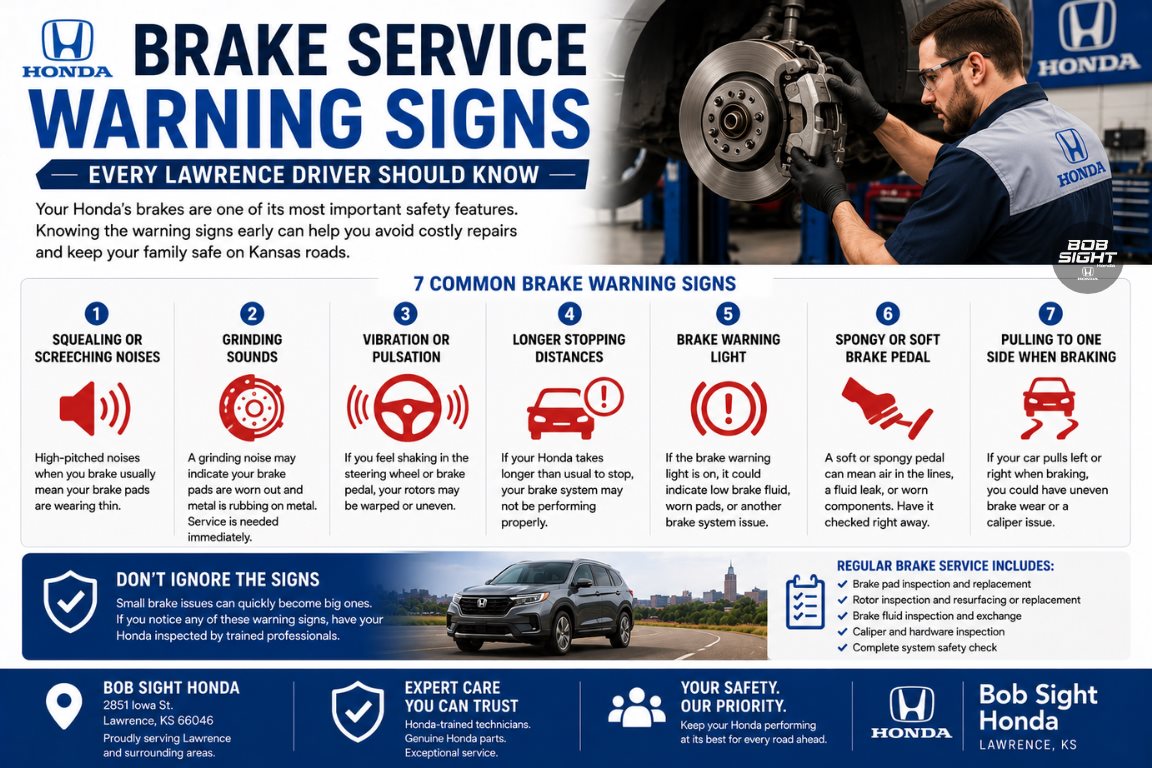
Schedule Honda brake service at Bob Sight Honda in Lawrence, KS
Honda brake service warning signs should never be ignored because safe braking performance is critical for drivers navigating Lawrence traffic, Kansas highways, changing weather conditions, and daily commuting throughout the Kansas City Metro. Whether you drive a Honda Accord, CR-V, Civic, Pilot, Passport, or Ridgeline, your braking system works constantly to keep passengers safe during sudden stops, heavy traffic, wet roads, and winter driving conditions. Over time, brake pads, rotors, calipers, and brake fluid naturally wear down and require inspection or replacement. Recognizing early warning signs can help drivers avoid expensive repairs while maintaining confident stopping power year-round.
Many drivers throughout Douglas County wait too long before scheduling brake inspections because brake wear often develops gradually rather than all at once. Small noises or minor vibrations may not seem urgent initially, but delayed service frequently leads to more severe wear and higher repair costs later. Kansas weather conditions also accelerate brake wear in different ways throughout the year. Summer heat, winter moisture, potholes, road salt, and stop-and-go commuting all impact braking performance over time.
Drivers commuting between Lawrence and Kansas City often place additional stress on braking systems because of highway speeds, traffic congestion, and frequent braking situations. Families transporting children, students commuting to the University of Kansas, and drivers traveling throughout Northeast Kansas all depend on reliable stopping performance daily. This guide explains the most common Honda brake service warning signs, what causes them, and why local drivers should take them seriously.
In This Guide You’ll Learn
This Honda brake service guide explains the most important brake warning signs and maintenance considerations Kansas drivers should understand.
- What common brake noises usually mean
- How Kansas weather impacts brake wear
- Why steering wheel vibration matters during braking
- What soft brake pedal feel can indicate
- How commuting patterns affect brake system life
- When drivers should schedule brake inspections
- Why certified Honda brake service matters long-term
Why Brake Service Matters for Kansas Drivers
Brake service is one of the most important maintenance priorities for Kansas drivers because stopping performance directly affects safety during commuting, family travel, highway driving, and severe weather conditions. While many drivers focus heavily on engine maintenance or tire care, brake system condition is equally important for daily driving confidence. Reliable brakes help drivers react quickly during sudden traffic changes, emergency stops, and slippery road conditions throughout Northeast Kansas.
Lawrence drivers experience a wide variety of braking conditions during the year. Heavy traffic near Massachusetts Street, busy school zones around the University of Kansas campus, and stop-and-go congestion near shopping centers all increase brake wear. Highway commuters traveling on K-10, I-70, and Highway 59 also place stress on brake systems because higher speeds generate additional heat during braking situations.
Kansas weather creates another layer of brake system stress. Summer heat can increase brake temperatures significantly during long drives or traffic congestion. Winter moisture and road salt exposure may accelerate corrosion on rotors, brake lines, and hardware components. Freeze-thaw cycles can also contribute to uneven wear patterns or reduced braking smoothness over time.
Brake maintenance matters for more than emergency stopping ability alone. Worn brake components can negatively affect steering stability, tire wear, suspension stress, and overall vehicle handling. Drivers who delay brake inspections often experience reduced fuel efficiency and increased repair costs because worn components begin damaging surrounding parts. Staying proactive helps Honda owners maintain consistent braking confidence while protecting long-term vehicle reliability.
Many local drivers searching for “Honda brake service near me” or “Honda brake pads replacement Lawrence KS” are often already noticing warning signs. Understanding those symptoms early helps prevent small issues from becoming larger repair concerns.
Squealing, Grinding, and Other Brake Noises You Should Never Ignore
Brake noises are often the earliest warning signs that Honda brake components need inspection or replacement. Many Lawrence drivers first notice brake issues when hearing squealing, grinding, scraping, or clicking sounds during braking. While some minor noises may occasionally result from moisture or debris, consistent brake noise usually indicates wear that deserves immediate attention.
Squealing is one of the most common symptoms of worn brake pads. Many brake pads include wear indicators that intentionally create noise once pad material becomes thin. This warning helps drivers schedule service before metal-to-metal contact develops. Drivers commuting daily through Lawrence traffic or frequently navigating stoplights along Iowa Street may experience faster brake pad wear because repeated braking increases friction and heat buildup.
Grinding noises are typically more serious because they often indicate that brake pad material has worn completely away. When this happens, metal backing plates may contact brake rotors directly, creating damage that usually requires rotor replacement as well. Grinding should never be ignored because stopping performance can decline quickly once severe wear develops.
Drivers may also notice clicking or rattling sounds during braking. These noises can sometimes indicate loose hardware, worn calipers, or uneven brake component wear. While these symptoms may seem less dramatic than grinding, they still deserve professional inspection because brake hardware plays a critical role in system stability and performance.
Here is a step-by-step process drivers should follow when brake noise appears:
- Pay attention to when the noise occurs during braking.
- Monitor whether the sound becomes louder over time.
- Avoid delaying inspections after grinding begins.
- Schedule brake service immediately if stopping performance changes.
- Ask technicians to inspect pads, rotors, fluid, and hardware together.
- Follow recommended maintenance before additional damage develops.
Drivers throughout Douglas County often wait too long before inspecting brake noise because the vehicle still feels drivable initially. However, delayed brake service frequently increases repair costs and safety risks over time.
Steering Wheel Vibrations and Brake Pulsation Explained
Steering wheel vibration during braking often signals uneven rotor wear or heat-related brake system issues that require inspection. Many Honda drivers notice vibration or pulsation when slowing down from highway speeds or braking downhill. These symptoms may feel minor at first, but they usually indicate that brake rotors are no longer wearing evenly.
Brake rotors experience extreme heat during repeated braking. Highway commuters driving between Lawrence and Kansas City often generate substantial rotor heat during sudden traffic slowdowns or repeated exit braking. Over time, excessive heat can contribute to uneven rotor surfaces that create pulsation through the steering wheel or brake pedal.
Potholes and rough Kansas roads may also contribute to braking vibration concerns. Suspension impacts can place additional stress on brake components while uneven tire wear and alignment problems sometimes amplify vibration symptoms. Drivers navigating winter-damaged roads throughout Northeast Kansas frequently encounter these conditions after freeze-thaw cycles create pavement deterioration.
Another common cause involves uneven brake pad deposits on rotor surfaces. This may occur when braking systems repeatedly overheat or when brake components wear inconsistently over time. While resurfacing may occasionally help in mild cases, many vehicles ultimately require rotor replacement to restore smooth braking performance.
Drivers should not assume vibration will disappear on its own. Even minor pulsation often worsens gradually with continued driving. Scheduling inspections early helps technicians identify whether the issue involves rotors, pads, tires, suspension components, or alignment concerns before additional wear develops.
Soft Brake Pedal Feel and Increased Stopping Distance
A soft brake pedal or increased stopping distance can indicate serious hydraulic or brake system concerns that require immediate inspection. Brake pedal feel should remain firm and predictable during normal driving conditions. When drivers notice the pedal sinking lower than usual, feeling spongy, or requiring extra pressure, the braking system may no longer be operating correctly.
One common cause involves moisture-contaminated brake fluid. Brake fluid absorbs moisture gradually over time, reducing braking effectiveness and increasing corrosion risk within brake lines and hydraulic components. Kansas humidity, rain exposure, and seasonal weather changes can accelerate moisture buildup throughout the year.
Air trapped inside brake lines may also create soft pedal feel because hydraulic pressure becomes inconsistent. Drivers who recently experienced brake repairs or neglected brake fluid maintenance may encounter this issue. Low brake fluid levels, leaking lines, or failing master cylinders can also contribute to reduced braking confidence.
Increased stopping distance is another major warning sign drivers should never ignore. If your Honda requires significantly more distance to stop safely than before, brake pads, rotors, tires, or fluid condition may be contributing factors. Heavy traffic around Lawrence and sudden highway slowdowns near Kansas City demand responsive braking performance at all times.
Drivers should take the following step-by-step actions when brake pedal feel changes:
- Check for dashboard brake warning lights immediately.
- Avoid aggressive driving or sudden braking situations.
- Monitor whether pedal softness worsens over time.
- Inspect for visible fluid leaks if safely possible.
- Schedule brake inspections immediately.
- Replace contaminated brake fluid when recommended.
Soft pedal feel often develops gradually, causing drivers to adapt subconsciously without realizing how much braking performance has changed. Prompt inspection helps restore predictable stopping power and overall driver confidence.
How Kansas Weather and Roads Affect Honda Brake Wear
Kansas weather conditions and road surfaces significantly influence how quickly Honda brake systems wear over time. Seasonal changes throughout Lawrence and surrounding areas place constant stress on braking components. Summer heat, winter road treatments, potholes, rainstorms, and temperature fluctuations all contribute to brake wear patterns.
Summer driving conditions increase brake temperatures substantially. Drivers sitting in traffic near downtown Lawrence or commuting daily across the Kansas City Metro may experience repeated heat buildup during stop-and-go driving. Excessive heat can accelerate brake pad wear and contribute to rotor warping over time.
Winter weather creates different challenges. Moisture exposure combined with road salt and freezing temperatures increases corrosion risk on rotors, calipers, brake lines, and hardware components. Drivers who mainly take short trips during winter may also experience surface rust buildup because brake systems do not always fully warm up during shorter drives.
Potholes and rough roads create additional braking stress as well. Freeze-thaw cycles commonly damage pavement throughout Douglas County, which may impact suspension alignment and braking smoothness. Uneven roads also contribute to faster wear on tires and brake components together.
Drivers traveling frequently between Lawrence, Topeka, and Kansas City should prioritize seasonal brake inspections because highway mileage accumulation increases wear faster than occasional local driving alone. Consistent maintenance planning helps drivers stay ahead of weather-related brake issues before they affect safety or drivability.
Quick Facts About Honda Brake Service in Lawrence KS
Honda brake maintenance helps Kansas drivers maintain safe stopping performance and long-term driving confidence.
- Squealing brakes often indicate worn brake pads.
- Grinding noises may signal severe brake wear.
- Brake vibration can indicate uneven rotor surfaces.
- Brake fluid absorbs moisture over time.
- Winter road salt increases corrosion risk.
- Heavy commuting accelerates brake wear.
- Brake inspections help prevent larger repairs.
- Tire condition also impacts stopping performance.
- Brake warning lights should never be ignored.
- Certified Honda brake service supports long-term reliability.
Understanding these brake service basics helps Lawrence drivers make safer maintenance decisions while reducing the likelihood of expensive repairs later.
Brake Fluid, Rotors, and Complete Brake System Maintenance
Brake maintenance involves far more than replacing brake pads because the entire braking system works together to provide safe and consistent stopping performance. Many drivers focus only on brake pads while overlooking other critical components such as rotors, brake fluid, calipers, hoses, and hardware. Complete brake inspections help identify developing issues throughout the system.
Brake fluid maintenance is especially important because fluid condition directly affects hydraulic pressure consistency. Over time, moisture contamination lowers fluid effectiveness while increasing corrosion risk inside brake lines and master cylinders. Drivers searching for “Honda brake service Lawrence KS” often do not realize brake fluid replacement may already be overdue.
Rotors also require close inspection during brake service visits. Excessive heat, uneven wear, or severe corrosion can affect rotor performance and create vibration during braking. In some cases, resurfacing may help restore smoothness temporarily, but many modern brake systems perform best with replacement rotors once wear becomes significant.
Brake calipers and hardware deserve attention as well because sticking or unevenly operating components may accelerate pad wear and reduce braking consistency. Kansas winter weather and moisture exposure increase the likelihood of hardware corrosion over time. Routine inspections help technicians catch these issues early.
Drivers throughout Northeast Kansas often benefit from comprehensive brake inspections during seasonal maintenance visits because technicians can evaluate pads, rotors, tires, suspension components, and brake fluid condition together. This proactive approach helps maintain safe braking performance while supporting long-term vehicle reliability.
Ownership Planning and Long-Term Brake Maintenance Strategy
Long-term Honda ownership becomes easier and safer when drivers treat brake maintenance as a proactive safety strategy rather than waiting for severe warning signs. Many drivers postpone brake service because gradual wear does not always feel urgent initially. However, delaying inspections often creates larger repair costs and reduces stopping performance over time.
One of the best ownership habits involves scheduling brake inspections during routine oil changes or tire rotations. Combining maintenance visits helps drivers stay organized while allowing technicians to monitor brake wear consistently. This approach also creates stronger maintenance records that support future trade-in value and long-term ownership confidence.
Commuters traveling regularly between Lawrence and Kansas City should monitor brake condition particularly carefully because highway traffic situations create repeated high-speed braking demands. Likewise, parents driving children daily through busy school traffic may experience accelerated brake wear from constant stop-and-go conditions.
Seasonal brake planning also matters. Fall inspections help drivers prepare for winter weather and icy roads, while spring inspections help identify corrosion or wear caused by winter conditions. Summer inspections remain important as well because heat and long-distance travel place additional stress on braking systems.
Another key ownership decision involves choosing certified Honda brake service rather than generic maintenance providers unfamiliar with Honda systems. Certified Honda technicians understand manufacturer specifications, proper fluid requirements, and model-specific brake system characteristics. That expertise helps maintain consistent braking performance over years of ownership.
Frequently Asked Questions About Honda Brake Service Near Me
How do I know if my Honda needs brake service?
Common brake warning signs include squealing noises, grinding sounds, steering wheel vibration, soft brake pedal feel, longer stopping distances, and dashboard brake warning lights. Even small changes in braking performance should be inspected because brake wear often worsens gradually over time. Drivers who commute frequently around Lawrence or Kansas City may notice symptoms sooner because of heavier braking demands.
Brake issues do not always develop dramatically at first. Many drivers adapt to subtle changes in braking feel without realizing stopping performance has declined. Delayed inspections often allow worn brake pads to damage rotors or other components, increasing repair costs significantly.
Drivers throughout Douglas County should schedule brake inspections immediately if braking feels less responsive than normal. Kansas weather conditions and road quality can accelerate brake wear faster than some drivers expect, particularly after harsh winters or heavy commuting seasons.
Why are my Honda brakes squealing?
Brake squealing usually indicates worn brake pads or moisture-related surface contact between brake components. Many brake pads include built-in wear indicators that intentionally create noise once the pads become thin. This warning system helps drivers schedule service before severe damage develops.
Occasional squealing after rain or overnight moisture may not always indicate major issues, but repeated squealing should still be inspected professionally. Drivers who frequently navigate stop-and-go traffic near Lawrence shopping areas often wear brake pads faster because of repeated braking cycles.
If squealing becomes louder, more frequent, or develops into grinding, drivers should avoid delaying service further. Local Honda technicians can inspect brake pads, rotors, fluid, and hardware to determine the exact cause quickly.
How often should Honda brake fluid be replaced?
Brake fluid replacement intervals vary depending on driving conditions, climate exposure, and vehicle usage, but regular inspections remain extremely important. Brake fluid absorbs moisture gradually over time, which reduces braking effectiveness and increases internal corrosion risk. Many drivers overlook brake fluid maintenance entirely until braking feel changes noticeably.
Kansas weather conditions can accelerate moisture contamination because seasonal humidity and temperature swings place additional stress on hydraulic systems. Drivers who experience frequent stop-and-go traffic or long highway commuting may also place extra demands on braking systems overall.
Certified Honda technicians can test brake fluid condition during routine maintenance visits and recommend replacement timing based on actual fluid quality. Staying proactive helps maintain consistent pedal feel and braking confidence year-round.
Can worn brakes affect fuel efficiency and handling?
Yes, worn or uneven brake components can negatively affect fuel efficiency, steering feel, tire wear, and overall handling stability. Dragging brake components may create additional rolling resistance that forces the engine to work harder during driving. Uneven braking performance may also impact steering predictability and ride quality.
Drivers sometimes notice increased vibration, pulling during braking, or reduced highway stability when brake wear becomes severe. These symptoms often develop alongside alignment concerns or uneven tire wear caused by rough Kansas roads and potholes.
Routine brake inspections help technicians identify these issues early before they begin affecting other vehicle systems. Drivers commuting between Lawrence and Kansas City benefit particularly from proactive maintenance because highway travel places constant stress on braking performance and vehicle stability.
Why Local Honda Brake Service Matters in Lawrence KS
Choosing trusted local Honda brake service helps Kansas drivers receive maintenance tailored to real regional driving conditions and long-term ownership needs. Drivers throughout Lawrence, Eudora, Baldwin City, Topeka, and the Kansas City Metro experience different weather patterns, road conditions, and commuting demands than drivers in many other regions. Local expertise helps technicians better understand how those conditions impact braking systems over time.
Honda brake systems are engineered for balanced stopping performance, comfort, and long-term reliability, but maintaining that performance requires consistent inspections and timely service. From highway commuting to family transportation and seasonal weather preparation, reliable brakes remain essential for safe daily driving throughout Northeast Kansas.
Bob Sight Honda proudly serves Lawrence-area drivers with certified Honda brake inspections, brake pad replacement, rotor service, and maintenance support for long-term ownership confidence. Staying ahead of brake warning signs helps drivers maintain safer, smoother, and more dependable driving performance year-round.
Helpful Links
Proud to be part of the Bob Sight Auto Group
Bob Sight Honda is proud to serve Lawrence, Topeka, Baldwin City, Eudora, and the greater Kansas City Metro as part of the Bob Sight Auto Group. Local drivers continue trusting the Bob Sight name for dependable vehicles, certified maintenance, and long-term automotive support across multiple dealership locations. Whether you are scheduling brake service, shopping for a Honda SUV, or maintaining your family commuter vehicle, the Bob Sight Auto Group remains committed to supporting Kansas and Missouri drivers with trusted automotive expertise.