Honda Brake Warning Signs Every Driver Should Recognize in Lawrence KS
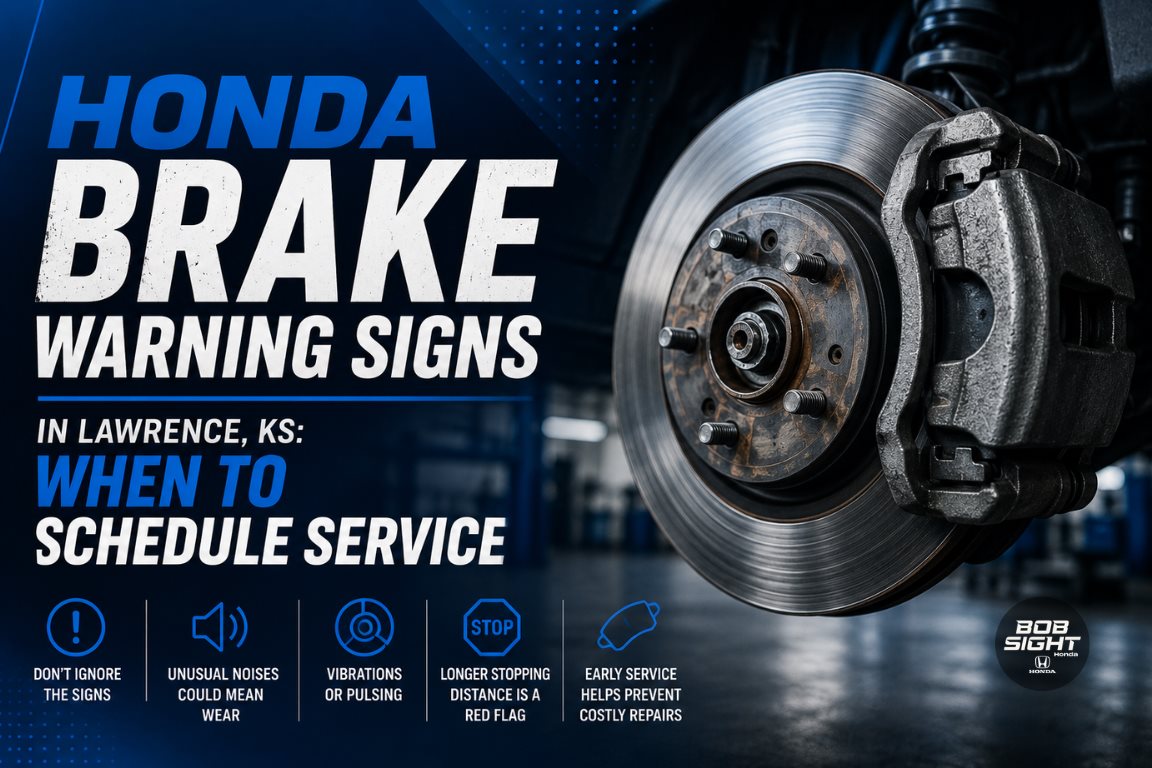
Schedule Honda Brake Service at Bob Sight Honda
Recognizing Honda brake warning signs early is one of the most important steps Lawrence, Kansas drivers can take to protect their safety, their passengers, and their vehicle’s long-term reliability. Your brakes are involved in nearly every drive, whether you are slowing down on Iowa Street, navigating traffic on 23rd Street, turning through downtown Lawrence, or merging onto K-10 for a commute toward the Kansas City Metro. When your Honda starts making unusual sounds, feeling different at the pedal, pulling while braking, or displaying a dashboard warning light, those changes should be taken seriously. At Bob Sight Honda in Lawrence, KS, drivers from Topeka, Eudora, Baldwin City, Douglas County, and surrounding Northeast Kansas communities can get local Honda brake service support when something does not feel right.
Brake systems are designed to give drivers feedback before a concern becomes more serious. A squeak, grind, vibration, burning smell, soft pedal, or longer stopping distance can all point to a system that needs inspection. Many drivers delay brake service because the vehicle still starts, still drives, and still stops, but waiting can allow normal wear to turn into more expensive damage. Understanding the early warning signs helps you respond faster and make safer decisions on local roads.
This guide explains the Honda brake warning signs every driver should know, what those symptoms may mean, and how local driving conditions around Lawrence can affect brake wear. It also covers when to schedule brake service, how to think about brake maintenance planning, and why timely inspections matter for daily driving in Northeast Kansas. Whether you drive a Honda Accord, Civic, CR-V, HR-V, Pilot, Odyssey, Passport, Ridgeline, or another Honda model, brake awareness is a key part of responsible ownership.
In this guide you will learn:
- The most common Honda brake warning signs
- What squeaking, grinding, vibration, and soft brake pedals may indicate
- How Lawrence, Topeka, Eudora, Baldwin City, and Kansas City Metro driving conditions affect brake wear
- When to schedule Honda brake service near you
- Why delayed brake repairs can lead to bigger problems
- How Bob Sight Honda supports safe driving across Northeast Kansas
Why Honda Brake Warning Signs Should Never Be Ignored
Honda brake warning signs should never be ignored because they often appear before braking performance becomes unsafe or before additional components are damaged. A vehicle’s brake system is designed to help you slow down, stop, and maintain control in changing traffic conditions. When the system starts making noise or feeling different, it is usually communicating that something needs attention. Catching those signals early can help protect your safety and reduce the chance of more involved repairs later.
Drivers in Lawrence often experience frequent braking during everyday travel. Stop-and-go traffic near Massachusetts Street, Iowa Street, 6th Street, 23rd Street, and the University of Kansas area can place added demand on brake pads and rotors. Even short trips can add up when they involve repeated stops, turns, hills, parking lots, and traffic lights. Over time, those normal driving patterns can cause brake components to wear down and eventually produce noticeable warning signs.
Ignoring brake symptoms can affect confidence behind the wheel. If your Honda takes longer to stop, vibrates when braking, pulls to one side, or makes grinding sounds, you may not have the same level of control you are used to having. That can become more concerning during sudden stops, wet roads, winter weather, or heavy traffic. Scheduling a brake inspection at Bob Sight Honda helps Lawrence-area drivers get a clear diagnosis and address concerns before they create more risk.
Common Honda Brake Warning Signs You Should Watch For
The most common Honda brake warning signs include squeaking, grinding, vibration, longer stopping distances, a soft brake pedal, pulling while braking, burning smells, and dashboard brake alerts. Some symptoms are easy to notice right away, while others develop gradually and may only appear during certain driving conditions. A sound that happens only in the morning, a vibration that appears only at highway speeds, or a pedal that slowly feels softer over time can still matter. Paying attention to these details helps a service technician understand what may be happening.
Here are key warning signs every Honda driver should recognize:
- Squeaking or squealing noises when braking
- Grinding sounds that may indicate advanced brake pad wear
- Vibration or pulsation in the brake pedal or steering wheel
- Longer stopping distances than normal
- A soft, spongy, or low brake pedal
- The vehicle pulling to one side while braking
- A burning smell after heavy braking
- A brake warning light or ABS light on the dashboard
These symptoms can point to different issues within the braking system. Squeaking often suggests early pad wear or surface contamination, while grinding may indicate more serious pad deterioration. Vibration can suggest rotor wear, uneven rotor surfaces, or other wheel-end concerns. Dashboard lights can point to several possibilities, which is why a professional inspection is the safest way to determine what service is needed.
What Squeaking or Grinding Brakes Mean for Your Honda
Squeaking or grinding brakes are among the clearest signs that your Honda should be inspected by a service professional. Squeaking often appears when brake pads are wearing down, and many brake pads include wear indicators designed to make noise when service is approaching. A light squeak may also be caused by moisture, dust, debris, or surface rust after a vehicle has been sitting. However, if the noise continues, gets louder, or happens consistently when braking, it should not be ignored.
Grinding is usually more serious than squeaking. A grinding sound can happen when the brake pad material has worn down enough that metal components begin contacting the rotor. This can reduce braking performance and damage rotors, which may increase repair complexity. If you hear grinding, it is smart to avoid unnecessary driving and schedule brake service as soon as possible.
Local driving conditions can make brake noises more noticeable. Lawrence drivers who make frequent short trips, drive through traffic-heavy areas, or use hilly neighborhood streets may wear brake pads faster than drivers who mostly travel at steady highway speeds. Moisture, winter road treatment, gravel, construction dust, and road debris can also affect what you hear from the braking system. A brake inspection at Bob Sight Honda can help determine whether the noise is normal surface noise or a sign of needed maintenance.
What Brake Pedal Vibration or Pulsation Can Indicate
Brake pedal vibration or pulsation can indicate uneven rotor wear, heat-related rotor changes, or other brake system concerns that should be inspected. Many drivers describe this feeling as a pulsing sensation in the pedal or a shaking feeling when slowing down. In some cases, the steering wheel may also vibrate while braking. These symptoms are often more noticeable when slowing from higher speeds, such as exiting K-10, I-70, or US-59.
Rotors play a major role in braking because the brake pads press against them to slow the vehicle. Over time, rotors can wear unevenly, develop surface variation, or be affected by heat. If the rotor surface is not smooth and consistent, the driver may feel vibration when braking. That vibration can become more noticeable as the condition progresses.
Drivers should not assume vibration is harmless just because the vehicle still stops. Braking should feel controlled, smooth, and predictable. If the pedal pulses or the steering wheel shakes, a technician should inspect the pads, rotors, calipers, tires, and related components. Bob Sight Honda can help Lawrence-area drivers identify the cause and recommend the correct repair path.
Why a Soft or Spongy Brake Pedal Matters
A soft, spongy, or low brake pedal can be a warning sign that your Honda’s braking system needs prompt attention. The brake pedal should feel consistent when you press it, and the vehicle should respond in a predictable way. If the pedal feels unusually soft, sinks closer to the floor, or requires more pressure than normal, that change can indicate a concern. It is important to treat this symptom seriously because it may affect stopping confidence.
A soft pedal can be related to brake fluid condition, air in the brake lines, hydraulic concerns, worn components, or other system issues. Brake fluid is essential because it transfers force from the pedal to the braking components. If that hydraulic system is not working properly, braking response can change. This is not something most drivers can accurately diagnose without a proper inspection.
If your Honda’s brake pedal suddenly feels soft or the vehicle does not stop as expected, avoid continuing to drive unless it is safe to do so. Brake concerns should be inspected by trained professionals because the system is directly tied to vehicle safety. Bob Sight Honda’s service team can inspect brake fluid, brake lines, pads, rotors, calipers, and related parts. For drivers in Lawrence, Eudora, Baldwin City, and Topeka, local access to brake service can make it easier to address the concern quickly.
How Driving Conditions in Northeast Kansas Affect Brake Wear
Driving conditions in Lawrence and across Northeast Kansas can directly affect how quickly Honda brake components wear and when service may be needed. City driving typically creates more brake wear because it involves repeated stopping and starting. Roads like Iowa Street, 23rd Street, Massachusetts Street, Clinton Parkway, and 6th Street can require frequent braking during busy parts of the day. Parking lots, school zones, neighborhood roads, and downtown traffic can add even more stopping events to a normal week.
Highway driving creates a different pattern of brake use. Drivers commuting on K-10 toward the Kansas City Metro or taking I-70 toward Topeka may brake less often during steady travel, but they may brake harder when exiting, slowing for traffic, or reacting to sudden congestion. Higher speeds can create more heat when braking, which can affect pads and rotors over time. This makes routine inspection important even if most of your mileage comes from highway travel.
Seasonal conditions in Northeast Kansas also matter. Rain can reduce traction and make stopping distances feel different, while winter conditions can involve snow, ice, road salt, and temperature swings. Gravel, potholes, road construction, and debris can also affect tires, suspension, and braking feel. Because local conditions change throughout the year, regular brake checks are a smart part of responsible Honda ownership.
Step-by-Step: What to Do When You Notice Brake Warning Signs
When you notice brake warning signs, the best response is to stay calm, pay attention to the symptom, drive cautiously, and schedule a professional inspection as soon as possible. Brake concerns can vary in severity, but it is always better to act early than to wait until the issue becomes more obvious. The more information you can provide about the symptom, the easier it may be for a technician to diagnose the concern. Try to notice when the symptom happens, how often it happens, and whether it changes with speed, weather, or braking pressure.
Follow these steps if you notice brake issues:
- Identify the symptom, such as squeaking, grinding, vibration, pulling, or a soft pedal
- Reduce aggressive driving and avoid sudden stops when possible
- Check the dashboard for brake, ABS, or other warning lights
- Pay attention to whether the issue happens at low speeds, highway speeds, or every stop
- Schedule a brake inspection with a trusted Honda service provider
- Follow the service recommendation based on the technician’s findings
Drivers in Lawrence should prioritize safety when brake concerns appear. If your brakes feel severely reduced, the pedal goes very low, or the vehicle does not stop normally, it may not be safe to keep driving. If the concern is mild but persistent, scheduling service quickly can help prevent additional wear. Bob Sight Honda gives local drivers a convenient place to have Honda brakes inspected and serviced near home.
Brake Service vs Delaying Repairs: What Kansas Drivers Should Know
Choosing timely brake service instead of delaying repairs can help protect safety, preserve braking performance, and reduce the chance of additional component damage. Many drivers wait because a brake noise seems minor or because the vehicle still feels drivable. The problem is that brake issues usually do not correct themselves. A small squeak can progress into grinding, worn pads can damage rotors, and vibration can become more noticeable over time.
Delaying brake service can also make the vehicle less predictable. Good brakes should respond smoothly and consistently every time you press the pedal. When the system starts to change, it can affect your confidence during traffic, bad weather, emergency stops, or downhill braking. This is a major reason drivers should not treat brake maintenance as optional.
For Kansas drivers, road conditions and seasonal weather can make delayed brake repairs more concerning. Wet roads, winter slick spots, construction traffic, and sudden slowdowns on highways can all require strong braking response. Routine brake inspections help identify normal wear before it becomes a larger problem. Scheduling brake service at Bob Sight Honda can help Lawrence-area drivers stay ahead of avoidable safety and repair concerns.
Quick Facts About Honda Brake Warning Signs
- Squeaking can indicate early brake pad wear or surface contamination.
- Grinding may indicate advanced brake pad wear and possible rotor contact.
- Vibration or pulsation can point to rotor or wheel-end concerns.
- A soft brake pedal should be inspected promptly.
- Longer stopping distances are a serious warning sign.
- Dashboard brake or ABS lights should never be ignored.
- Stop-and-go Lawrence driving can increase brake wear.
- Rain, snow, road debris, and seasonal temperature changes can affect braking performance.
These quick facts can help Honda drivers recognize brake concerns before they become more serious. Brake warning signs often start small, but they are still important. A sound, vibration, dashboard light, or change in pedal feel is your vehicle’s way of telling you something needs attention. Responding early helps protect stopping performance and supports safer daily driving.
It is also important to remember that brake wear varies by driver. Someone who drives mostly around downtown Lawrence may experience different brake wear than someone commuting daily on K-10 or I-70. A driver in a hilly neighborhood or a driver who frequently carries passengers and cargo may notice different wear patterns. This is why routine inspections are more useful than guessing based only on mileage.
When in doubt, schedule an inspection. Brake systems are too important to leave to uncertainty. A trained technician can identify whether the issue is normal wear, a minor adjustment, or a repair that should be handled quickly. Bob Sight Honda can help drivers throughout Lawrence, Topeka, Baldwin City, Eudora, and Douglas County understand what their Honda needs.
Ownership Planning for Brake Maintenance in Lawrence KS
Planning ahead for brake maintenance helps Honda owners keep their vehicles safer, more reliable, and easier to manage over time. Brake service should be part of your routine ownership plan, not something you think about only after a loud noise appears. If you drive frequently in Lawrence traffic, your brakes may need closer attention than you expect. Regular inspections can help you understand where your pads, rotors, and brake fluid stand before problems disrupt your schedule.
Good ownership planning starts with knowing your driving habits. If most of your trips are short drives around Lawrence, your brakes may experience frequent heat cycles and repeated stops. If you commute to Topeka, Eudora, Baldwin City, or the Kansas City Metro, your mileage may climb faster and your brakes may experience higher-speed stops. Both types of driving can be normal, but they require awareness and maintenance consistency.
Working with a local dealership can make brake planning easier. Bob Sight Honda can inspect your brake system during routine service visits and help you understand when maintenance may be approaching. That gives you more time to plan instead of being surprised by a repair. For busy Northeast Kansas drivers, that kind of predictability can make vehicle ownership much less stressful.
When to Schedule Honda Brake Service Near You
You should schedule Honda brake service near you when you hear unusual brake noises, feel vibration, notice reduced stopping response, see a warning light, or simply know your vehicle is due for inspection. Waiting for a brake concern to become severe is not a safe strategy. Brake maintenance is most effective when issues are found early. Even if the symptom seems small, an inspection can confirm whether it needs immediate attention or continued monitoring.
Drivers should also consider scheduling brake checks before seasonal changes or longer trips. Before winter, it is smart to make sure your brakes, tires, wipers, and battery are ready for cold mornings and changing road conditions. Before summer travel, a brake inspection can add confidence before highway driving, family trips, or busy commuting months. These seasonal checkpoints are helpful for drivers throughout Lawrence, Topeka, Eudora, Baldwin City, and nearby communities.
Bob Sight Honda offers a convenient local option for Honda brake inspections and service in Lawrence, KS. Whether your vehicle needs pads, rotors, brake fluid service, diagnostics, or a general inspection, the service team can help determine the right next step. Scheduling service also helps keep your Honda maintenance history organized. That can support long-term ownership value and give you more confidence every time you drive.
Why Bob Sight Honda Is a Trusted Choice for Brake Service
Bob Sight Honda is a trusted choice for brake service because local drivers can rely on Honda-focused expertise, convenient service access, and support tailored to Northeast Kansas driving conditions. Brake service is not just about replacing parts, it is about understanding how the full braking system works together. Pads, rotors, calipers, brake fluid, tires, and related components all influence how the vehicle stops. A proper inspection helps identify what is actually needed instead of relying on guesswork.
Location is also important for busy drivers. Bob Sight Honda is located in Lawrence, making it convenient for drivers near Iowa Street, K-10, the University of Kansas, downtown Lawrence, and surrounding Douglas County communities. Drivers from Topeka, Baldwin City, Eudora, and other nearby areas can also access service without traveling far outside the region. That convenience can make it easier to schedule brake inspections before symptoms become more serious.
The Bob Sight Honda team supports drivers through routine maintenance, service recommendations, and long-term ownership guidance. Whether you are hearing a squeak, feeling vibration, seeing a dashboard light, or preparing for seasonal driving, the dealership can help you understand your options. Safe braking is central to confident driving, and timely service helps protect that confidence. For Honda owners in Lawrence and across Northeast Kansas, Bob Sight Honda is ready to help keep your vehicle road-ready.
Frequently Asked Questions About Honda Brake Warning Signs
What are the first signs my Honda brakes need service?
The first signs your Honda brakes may need service often include squeaking, squealing, light grinding, vibration, reduced responsiveness, or a change in brake pedal feel. You may also notice the vehicle takes longer to stop than it used to, or that the brake pedal feels softer than normal. Some drivers first notice brake concerns only during certain conditions, such as morning starts, rainy weather, or slowing down from highway speeds. Even if the symptom is not constant, it is still worth having the brake system inspected.
Brake warning signs are important because they often appear before a major problem develops. A squeak can indicate brake pad wear, while grinding can suggest that wear has progressed further. Vibration may point to rotor concerns, and a soft pedal can indicate a hydraulic or brake fluid issue. These symptoms should not be ignored because braking performance is directly tied to driver and passenger safety.
Drivers in Lawrence should pay close attention to brake changes because local driving often involves frequent stops. Traffic near Iowa Street, 23rd Street, Massachusetts Street, and school or campus areas can increase normal brake wear. If you commute from Eudora, Baldwin City, Topeka, or Kansas City, mileage and highway braking can also contribute to wear over time. Scheduling service with Bob Sight Honda helps identify the issue and keep your Honda prepared for local driving.
Is it safe to drive with squeaking brakes in Lawrence KS?
Squeaking brakes may not always mean your vehicle is unsafe at that exact moment, but they should still be inspected promptly. In some cases, squeaking can be caused by moisture, dust, or brief surface rust, but consistent squeaking often points to brake pad wear. Because the sound can have several causes, it is not wise to assume it is harmless. A brake inspection is the safest way to know what is happening.
Continuing to drive with squeaking brakes can allow the problem to progress. If the brake pads are wearing down, the sound may eventually turn into grinding. Grinding can indicate that the pad material has worn away enough to risk rotor damage. Addressing the concern early may help prevent more extensive repairs.
Lawrence drivers often encounter stop-and-go traffic, pedestrians, cyclists, campus areas, and changing weather conditions. In those situations, reliable braking is essential. If your Honda is making consistent brake noise, schedule service before the issue worsens. Bob Sight Honda can inspect your brakes and recommend the right next step based on your vehicle’s condition.
How often should I check my brakes near me?
Brake inspection timing depends on your driving habits, vehicle mileage, and local conditions. Many drivers benefit from having brakes checked during routine maintenance visits, such as oil changes or tire rotations. If you drive frequently in stop-and-go traffic, carry passengers often, commute long distances, or notice any warning signs, you may need checks more often. The most important rule is to schedule an inspection any time your brakes sound or feel different.
Drivers in Lawrence may experience brake wear faster if they spend a lot of time in city traffic. Frequent stops near downtown, campus, shopping areas, and busy intersections can wear pads more quickly than steady highway driving. Drivers commuting on K-10 or I-70 may experience higher-speed braking that affects rotors and pads differently. Since brake wear varies, inspections are the best way to understand your specific vehicle.
Working with a local Honda service provider makes routine brake checks easier to manage. Bob Sight Honda can inspect brake pads, rotors, calipers, brake fluid, and related components. A technician can explain what is still in good condition and what may need attention soon. This helps drivers plan service instead of waiting for unexpected brake problems.
Where can I get Honda brake service near me in Lawrence KS?
Drivers searching for Honda brake service near me in Lawrence KS can schedule service at Bob Sight Honda. The dealership provides Honda-focused brake inspections, maintenance, and repair recommendations for local drivers. Whether your Honda needs a basic inspection or a closer look at noise, vibration, or dashboard alerts, the service team can help. This gives drivers a convenient local option for brake care in Douglas County.
Bob Sight Honda serves drivers from Lawrence as well as surrounding communities like Topeka, Eudora, Baldwin City, and the Kansas City Metro. Local access matters because brake concerns should not be delayed due to inconvenience. If you notice squeaking, grinding, pulling, vibration, or reduced stopping response, scheduling nearby service can help you address the concern sooner. Timely brake service supports safer daily driving.
Honda brake service may include pad inspection, rotor inspection, brake fluid checks, caliper evaluation, and recommendations based on the condition of your vehicle. The goal is to identify what your Honda actually needs and help keep the brake system working properly. Regular service also helps build a stronger maintenance history for your vehicle. For Lawrence-area drivers, Bob Sight Honda is a trusted resource for ongoing Honda care.
What does it mean if my Honda brake warning light comes on?
A Honda brake warning light can indicate several possible issues, so it should be taken seriously. In some cases, the light may be related to the parking brake, brake fluid level, brake system condition, or another system alert. If the light appears while driving or stays on after the parking brake is released, your vehicle should be inspected. Dashboard warnings are designed to help drivers respond before problems become more serious.
If a brake warning light appears along with reduced stopping power, a soft pedal, grinding, or unusual handling, the concern may be more urgent. In that case, avoid unnecessary driving and seek service support as soon as it is safe. Brake-related warning lights are not something to dismiss or reset without diagnosis. The underlying cause should be identified so the right repair can be completed.
Drivers in Lawrence, Topeka, Eudora, and Baldwin City can schedule a brake inspection at Bob Sight Honda to determine why the light appeared. A technician can inspect the system and explain what the alert means for your specific vehicle. This helps prevent confusion and gives you a clear service path. Addressing dashboard warnings promptly supports safer driving throughout Northeast Kansas.
Helpful Links
- Schedule Honda Service
- Honda Service Department
- Honda Service Specials
- Bob Sight Honda Homepage
- New Honda Inventory
Proud to be part of the Bob Sight Auto Group
Bob Sight Honda in Lawrence, Kansas is proud to be part of the Bob Sight Auto Group, serving drivers across Lawrence, Topeka, Baldwin City, Eudora, Douglas County, and the Kansas City Metro. Whether you need Honda brake service, routine maintenance, new vehicle guidance, or long-term ownership support, our team is here to help. We understand that safe braking is essential for every commute, every errand, and every family drive. From the service lane to the showroom, Bob Sight Honda is committed to helping Northeast Kansas drivers enjoy a more confident Honda ownership experience.