Recognizing Honda brake warning signs early helps Kansas drivers protect safety, reliability, and long-term vehicle health. From daily commuting through Lawrence to highway travel across Douglas County and the Kansas City Metro, braking systems play a critical role in every drive. Honda brake systems are designed for durability, but real-world driving conditions can accelerate wear over time. Knowing what warning signs to watch for helps drivers take action before small concerns turn into larger issues.
Honda Brake Warning Signs Kansas Drivers Should Recognize
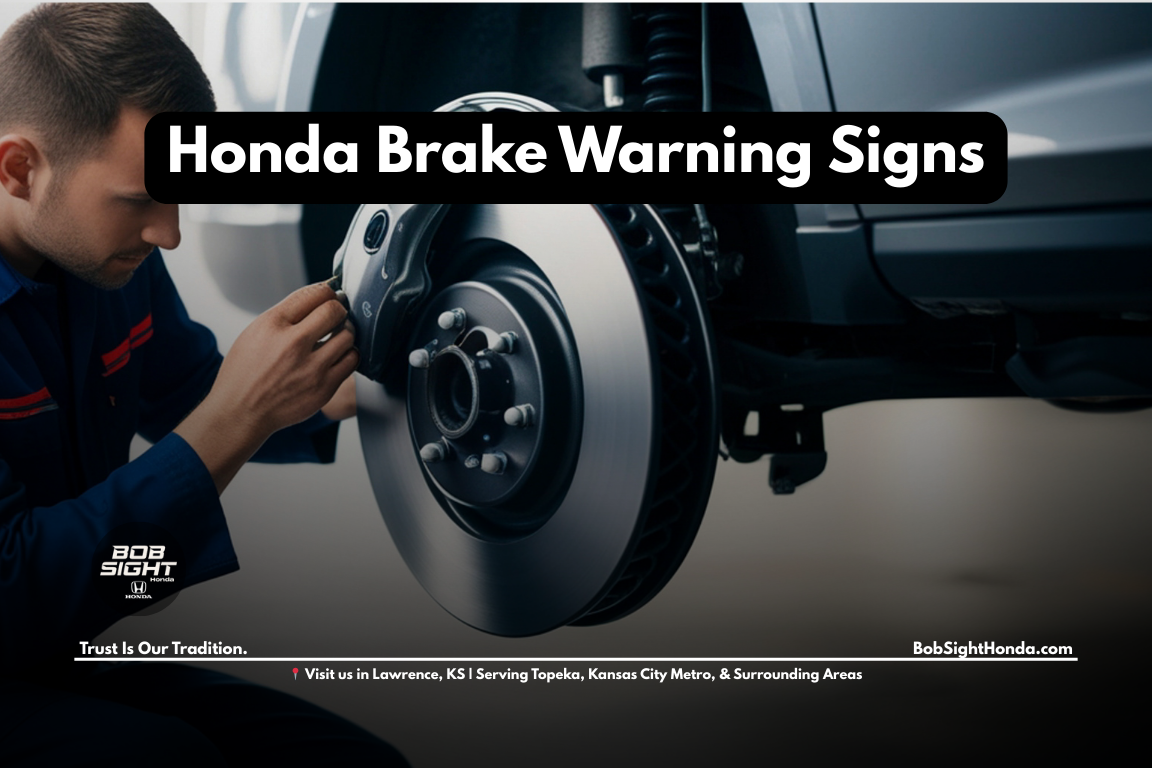
Schedule Honda Brake Service at Bob Sight Honda in Lawrence, KS
In this guide you’ll learn:
- The most common Honda brake warning signs Kansas drivers encounter
- How local driving conditions affect brake wear in Douglas County
- When brake symptoms signal the need for professional inspection
- Why local Honda service matters for long-term safety and reliability
Why Brake Awareness Matters for Kansas Driving Conditions
Brake systems experience constant stress during everyday driving across Kansas. Lawrence drivers often encounter stop-and-go traffic near Massachusetts Street, campus areas, and busy corridors like Iowa Street. Each stop places friction on brake pads and rotors, gradually wearing components down. Understanding early warning signs helps drivers respond before braking performance is compromised.
Kansas weather also influences brake wear over time. Temperature swings, winter moisture, and road treatments can affect brake components and hardware. These conditions may lead to corrosion or uneven wear if issues go unnoticed. Regular inspections become an important part of ownership planning.
For Douglas County drivers traveling frequently toward Baldwin City, Eudora, or Topeka, mileage can add up quickly. Highway driving introduces different braking patterns than city driving. Bob Sight Honda helps local drivers understand how these factors affect brake health.
Squeaking, Squealing, and Unusual Brake Noises
One of the earliest Honda brake warning signs drivers notice is unusual noise. High-pitched squealing often occurs when brake pads reach a certain level of wear. Honda brake pads include indicators designed to alert drivers before pads wear too thin. Ignoring these sounds can lead to further component damage.
Grinding noises are more serious and often signal metal-to-metal contact. This sound indicates brake pads may be fully worn, allowing rotors to be damaged. Continued driving in this condition can reduce braking efficiency and increase repair complexity.
Bob Sight Honda technicians evaluate brake noise during inspections. Identifying the cause early helps Lawrence drivers maintain safe stopping performance across Kansas roads.
Brake Pedal Changes and What They Mean
Changes in brake pedal feel are another important warning sign. A soft or spongy pedal may indicate air in the brake lines or fluid concerns. For Kansas drivers navigating hilly areas near Clinton Parkway or frequent stops downtown, pedal responsiveness matters.
A vibrating brake pedal often points to rotor irregularities. Warped or uneven rotors can develop over time due to heat and wear. This vibration may be felt during braking at higher speeds.
At Bob Sight Honda, brake inspections include pedal feel evaluation. This comprehensive approach helps Douglas County drivers understand how braking feedback relates to overall system health.
Dashboard Brake Warning Lights
Modern Honda vehicles are equipped with dashboard warning lights designed to alert drivers to braking concerns. A brake system warning light may indicate low brake fluid or system issues. Ignoring warning lights can allow problems to progress unnoticed.
Some warning lights are tied to electronic brake systems or stability control features. These systems support safe driving, particularly in wet or icy Kansas conditions. Addressing alerts promptly helps maintain system integrity.
Bob Sight Honda technicians use factory diagnostic tools to interpret warning lights accurately. This ensures Lawrence drivers receive clear guidance on next steps.
Pulling, Shaking, or Reduced Stopping Confidence
When a vehicle pulls to one side during braking, it may indicate uneven brake wear or hydraulic issues. Douglas County roads with varying surfaces can reveal these symptoms quickly. Pulling reduces driver confidence and can affect control.
Shaking or steering wheel vibration during braking often relates to rotor condition. These sensations may become more noticeable at highway speeds along K-10. Addressing these signs early helps preserve braking consistency.
Bob Sight Honda evaluates braking balance and stopping performance during inspections. This helps Kansas drivers maintain predictable handling in real-world conditions.
Brake Fluid Condition and Inspection Timing
Brake fluid plays a critical role in transmitting braking force. Over time, brake fluid absorbs moisture, which can affect braking response. Kansas humidity and seasonal changes contribute to this process.
Discolored or contaminated brake fluid may reduce braking efficiency. Regular inspections help ensure fluid remains within Honda specifications. This supports consistent pedal feel and stopping power.
At Bob Sight Honda, brake fluid condition is checked as part of routine service. This proactive care supports long-term safety for Lawrence drivers.
How Local Driving Habits Influence Brake Wear
Driving habits significantly impact brake longevity. Frequent short trips around Lawrence increase brake usage compared to steady highway driving. Stop-heavy routes near schools and shopping areas accelerate wear.
Highway driving toward Topeka or Kansas City introduces different braking demands. While less frequent, highway braking involves higher speeds and heat. Both patterns influence maintenance needs.
Bob Sight Honda helps drivers understand how local habits affect brake service timing. This education supports informed ownership planning.
When to Schedule a Honda Brake Inspection Near Me
Any noticeable brake warning sign should prompt an inspection. Waiting for symptoms to worsen can affect safety and vehicle condition. Kansas drivers benefit from addressing concerns early.
Routine inspections also help catch issues before symptoms appear. Scheduled maintenance visits provide opportunities to evaluate brake components proactively. This approach supports peace of mind.
Bob Sight Honda offers convenient brake inspections for Douglas County drivers. Local service access simplifies scheduling and follow-up care.
Quick Facts About Honda Brake Warning Signs
- Unusual noises often indicate pad wear
- Pedal changes can signal fluid or rotor concerns
- Warning lights should never be ignored
- Local driving habits influence brake wear
- Early inspections help protect long-term safety
Frequently Asked Questions About Honda Brakes Near Me
What are the most common Honda brake warning signs near me?
Common Honda brake warning signs include squealing noises, pedal vibration, and dashboard alerts. Kansas drivers may also notice reduced stopping confidence or pulling during braking. These symptoms often develop gradually.
Local driving conditions influence how warning signs appear. Stop-and-go traffic and seasonal weather contribute to wear patterns. Recognizing early changes helps drivers respond promptly.
Bob Sight Honda helps Lawrence drivers interpret brake symptoms accurately. Professional inspections clarify whether service is needed.
How often should Kansas drivers have their Honda brakes inspected?
Brake inspection frequency depends on driving habits and mileage. Douglas County drivers who commute daily may benefit from more frequent evaluations. Routine service visits often include brake checks.
Seasonal inspections help account for Kansas weather impacts. Moisture and temperature changes affect brake components over time. Proactive care supports reliability.
Bob Sight Honda provides inspection guidance tailored to local driving needs. This helps drivers plan maintenance confidently.
Why choose a local Honda service center for brake concerns?
Local Honda service centers understand regional driving conditions. Douglas County roads and traffic patterns influence brake wear. Local expertise supports accurate recommendations.
Certified technicians use Honda-approved tools and procedures. This ensures braking systems are evaluated according to factory standards. Quality service supports long-term safety.
Bob Sight Honda offers convenient access for Lawrence drivers. Ongoing support strengthens the ownership experience.
Trusted Brake Care for Lawrence and Douglas County Drivers
Honda brake warning signs should never be ignored. Early recognition helps protect safety, vehicle performance, and long-term reliability. Kansas drivers benefit from understanding what their vehicle is communicating.
Bob Sight Honda proudly serves Lawrence, Baldwin City, Eudora, and Topeka drivers. Convenient location and certified expertise support confident maintenance decisions. Local presence matters.
For drivers searching for Honda brake service near me, Bob Sight Honda remains a trusted resource. The team is committed to keeping Douglas County drivers safe on the road.
Helpful Links
- Schedule Honda Service
- Honda Service Department
- New Honda Inventory
- Used Vehicle Inventory
- Finance Department
Proud to be Part of the Bob Sight Auto Group
Bob Sight Honda is proud to be part of the Bob Sight Auto Group, serving drivers throughout Kansas and Missouri with trusted automotive expertise. Each Bob Sight location shares a commitment to transparency, long-term ownership support, and community-focused service. This consistent approach helps drivers feel confident at every stage of ownership.