Honda Oil Change Lawrence KS: How Seasonal Weather Impacts Your Engine
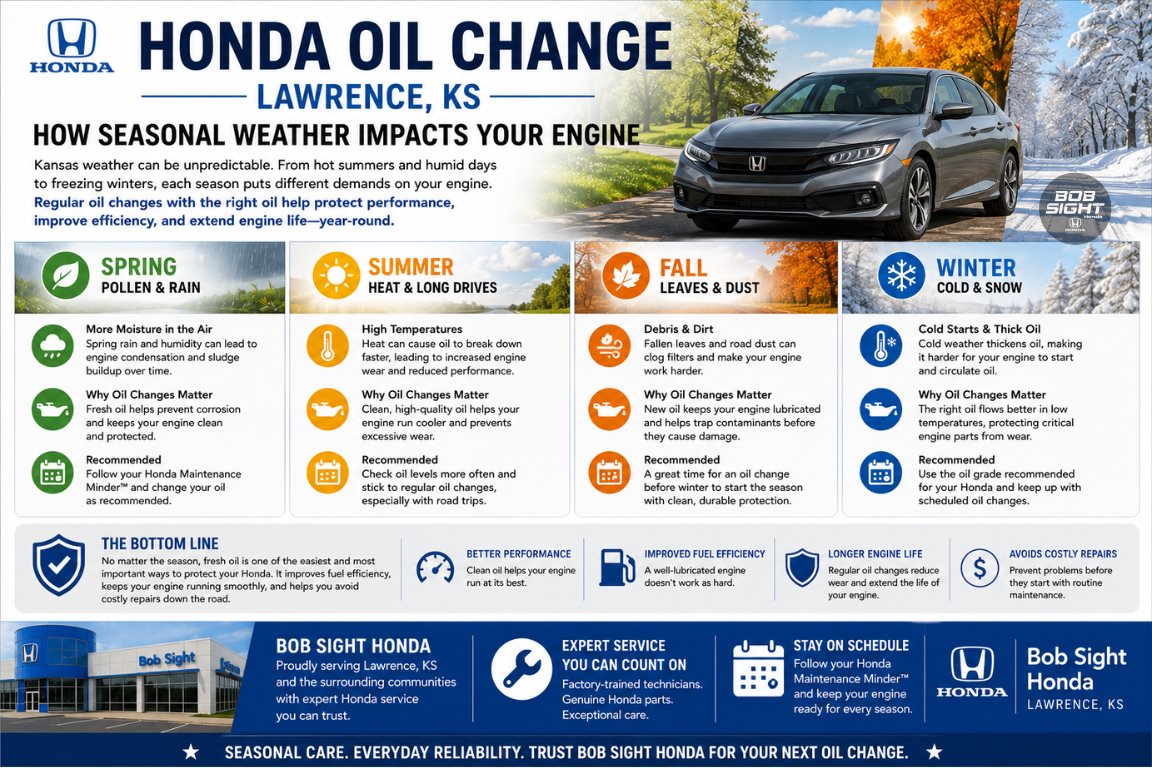
Schedule your Honda oil change at Bob Sight Honda in Lawrence, KS
Honda oil changes are one of the most important maintenance services for protecting engine performance during the changing seasonal weather conditions drivers experience throughout Lawrence, Topeka, Baldwin City, Eudora, and the greater Kansas City Metro. Kansas weather creates unique stress on vehicle engines because drivers regularly experience freezing winter mornings, humid spring storms, intense summer heat, and rapid seasonal temperature swings. These changing conditions directly impact engine oil performance, lubrication quality, fuel efficiency, and long-term engine reliability. Drivers who understand how weather affects oil performance are often better prepared to protect their Honda vehicles year-round.
Many drivers assume oil changes are based only on mileage, but weather, commuting habits, trip length, and driving conditions all influence how quickly engine oil breaks down. Stop-and-go traffic around Lawrence, long-distance commuting on K-10 and I-70, and repeated cold starts during Kansas winters all place different levels of stress on Honda engines. Delaying oil changes under these conditions can increase engine wear, reduce fuel economy, and shorten long-term reliability.
Modern Honda vehicles are engineered for efficiency and durability, but maintaining that performance requires clean, high-quality oil that can adapt to changing temperatures. Synthetic oil helps many Honda engines maintain protection during both freezing cold starts and high summer operating temperatures. Understanding how seasonal weather affects engine oil can help drivers make smarter maintenance decisions while reducing long-term ownership stress.
This guide explains how Kansas weather impacts Honda oil life, why routine oil changes matter for local drivers, and what commuters throughout Northeast Kansas should know about long-term engine protection.
In This Guide You’ll Learn
This Honda oil change guide explains how seasonal weather conditions impact engine performance and maintenance planning in Kansas.
- Why Kansas weather affects engine oil differently throughout the year
- How winter cold impacts Honda engine protection
- Why summer heat accelerates oil breakdown
- How commuting patterns affect oil life
- What the Honda Maintenance Minder system tracks
- Why synthetic oil matters for Kansas drivers
- How routine oil changes protect long-term reliability
Why Oil Changes Matter for Honda Engines in Kansas
Routine Honda oil changes are critical for Kansas drivers because engine oil lubricates, cools, cleans, and protects internal engine components during constantly changing weather and driving conditions. Without clean oil, metal engine parts experience increased friction and heat buildup, which gradually accelerates wear. Oil also helps remove contaminants and prevent sludge accumulation that can negatively affect engine performance over time.
Kansas drivers place unique demands on engines because weather conditions fluctuate dramatically throughout the year. Winter cold starts create stress because oil thickens at lower temperatures before reaching ideal operating flow. Summer heat creates the opposite challenge because high temperatures accelerate oil breakdown and increase overall engine operating stress. Drivers commuting regularly throughout Lawrence and the Kansas City Metro often experience both extremes during the same year.
Traffic conditions also influence oil life significantly. Stop-and-go driving around downtown Lawrence or heavy congestion near Kansas City creates repeated heat cycles that can shorten oil effectiveness. Meanwhile, highway commuters traveling long distances on K-10 and I-70 may accumulate mileage quickly even when driving conditions feel relatively smooth. Both scenarios still require timely maintenance planning.
Modern Honda engines are designed to perform efficiently, but they still rely heavily on proper lubrication quality. Delayed oil changes can eventually contribute to reduced fuel economy, increased engine wear, poor acceleration response, and higher long-term repair risks. Drivers who stay proactive with oil maintenance often experience smoother engine operation and stronger long-term reliability.
Many drivers searching for “Honda oil change Lawrence KS” or “Honda synthetic oil change near me” are trying to better understand how local weather conditions affect maintenance timing. Seasonal driving realities make these questions extremely important for long-term ownership planning.
How Winter Weather Impacts Honda Engine Oil
Kansas winter weather places major stress on Honda engines because freezing temperatures affect oil flow, battery performance, and cold-start lubrication. During cold mornings throughout Lawrence and Douglas County, engine oil thickens naturally before the engine reaches operating temperature. Thickened oil flows more slowly during startup, which temporarily reduces lubrication efficiency until the engine warms.
Cold starts are one of the most stressful moments for an engine because metal components begin moving before oil has fully circulated. Drivers making repeated short trips around Lawrence during winter often place even more stress on engines because the vehicle may never remain warm long enough for optimal oil performance. Students, commuters, and parents running frequent errands may unknowingly create these conditions regularly.
Synthetic oil provides important advantages during winter weather because it maintains more stable viscosity in cold temperatures. Synthetic oil flows more effectively during freezing conditions, helping engines receive lubrication faster during startup. This matters significantly during Kansas cold snaps where overnight temperatures may fall well below freezing.
Winter driving also increases moisture accumulation risks inside engines. Short trips during cold weather may not allow enough heat buildup to fully evaporate condensation, which can gradually contaminate oil quality over time. Drivers mainly making short city trips around Lawrence often experience this issue more than long-distance commuters.
Here is a step-by-step winter oil maintenance strategy Kansas drivers should follow:
- Use manufacturer-recommended synthetic oil when applicable.
- Schedule oil changes before winter weather begins.
- Monitor oil life percentages during cold months.
- Avoid delaying maintenance after repeated short-trip driving.
- Inspect battery and fluid systems before freezing temperatures.
- Allow engines a brief warm-up period during severe cold.
Drivers who prepare proactively for winter conditions often experience easier cold starts, smoother performance, and improved long-term engine protection throughout the season.
Why Summer Heat Accelerates Oil Breakdown
High Kansas summer temperatures accelerate oil breakdown because engines operate under greater thermal stress during hot-weather driving conditions. Summer heat affects both engine temperatures and oil stability, particularly during long commutes, traffic congestion, and highway travel throughout Northeast Kansas. Drivers sitting in traffic near downtown Lawrence or commuting toward Kansas City during extreme heat often place substantial stress on engine lubrication systems.
Engine oil naturally breaks down over time, but high temperatures accelerate this process significantly. Heat causes oil additives to degrade faster, reducing the oil’s ability to lubricate and protect internal components effectively. Overheated oil may also lose viscosity stability, reducing its overall protective qualities.
Long-distance summer travel creates additional stress because engines operate continuously at higher temperatures during highway driving. Families taking road trips, commuters driving extended distances daily, and students traveling home during school breaks often accumulate significant mileage during summer months. These driving conditions can shorten oil life considerably.
Air conditioning usage also contributes indirectly to engine workload because cooling systems and compressors increase overall engine demand during hot weather. While modern Honda engines are designed to handle these conditions efficiently, routine oil maintenance remains essential for preserving performance.
Drivers should pay close attention to oil maintenance timing during summer because high heat can gradually increase engine wear if oil quality deteriorates too far. Synthetic oil generally performs better during extreme heat because it resists thermal breakdown more effectively than conventional oil. Many Honda drivers throughout Lawrence benefit from synthetic oil specifically because of Kansas temperature extremes.
How Daily Commuting Affects Honda Oil Life
Daily commuting patterns significantly affect Honda oil life because trip length, traffic conditions, and driving habits all influence engine operating stress. Drivers throughout Lawrence and the Kansas City Metro often assume highway commuting is easy on engines, but heavy mileage accumulation still affects maintenance timing. Meanwhile, stop-and-go commuting can create repeated heat cycles that shorten oil effectiveness even faster.
Long-distance commuters traveling regularly between Lawrence and Kansas City may accumulate mileage quickly despite relatively smooth highway conditions. High weekly mileage means oil change intervals arrive sooner simply because the engine operates more frequently. Drivers often underestimate how quickly commuting mileage builds over time.
Short-distance commuters face different maintenance concerns. Drivers making repeated short trips around downtown Lawrence or near the University of Kansas may not allow engines enough time to reach full operating temperature consistently. These repeated cold starts create additional wear because oil circulation remains less efficient during warm-up periods.
Traffic congestion creates another challenge because engines spend more time idling and repeatedly accelerating and braking. Heat buildup increases during these conditions, particularly during summer weather. Drivers navigating heavy Kansas City traffic daily often experience this type of oil stress regularly.
Here is a step-by-step approach commuters should follow for better oil maintenance planning:
- Track average weekly driving mileage carefully.
- Monitor the Honda Maintenance Minder system regularly.
- Adjust oil change timing for severe driving conditions.
- Schedule inspections during heavy commuting seasons.
- Use synthetic oil for improved temperature protection.
- Address warning lights or unusual engine behavior immediately.
Commuters who adapt maintenance schedules to real-world driving conditions often maintain smoother engine performance and stronger long-term reliability overall.
Understanding the Honda Maintenance Minder System
The Honda Maintenance Minder system helps drivers determine oil change timing based on real-world driving conditions rather than mileage alone. Many modern Honda vehicles use intelligent monitoring systems that evaluate engine operation, temperature conditions, trip length, and driving behavior to calculate oil life percentages more accurately.
Instead of relying strictly on fixed mileage intervals, the Maintenance Minder system adjusts recommendations dynamically depending on how the vehicle is driven. Drivers experiencing heavy stop-and-go traffic, repeated short trips, or extreme weather conditions may see oil life percentages decrease faster than drivers operating under milder conditions.
The system displays remaining oil life percentages and maintenance codes directly on the dashboard. Drivers throughout Lawrence often notice reminders appearing sooner during harsh winter weather or periods of intense summer commuting. This flexibility helps ensure maintenance timing better reflects actual engine stress rather than generalized mileage estimates.
Many drivers mistakenly ignore Maintenance Minder alerts because the vehicle still feels normal during driving. However, oil breakdown often occurs gradually without immediately noticeable symptoms. Delayed service can increase long-term wear even before performance issues become obvious.
Understanding how the system works helps drivers make better maintenance decisions while avoiding unnecessary delays. Certified Honda technicians at Bob Sight Honda can also explain Maintenance Minder codes and help drivers understand how local commuting and weather patterns influence oil life specifically in Kansas driving conditions.
Quick Facts About Honda Oil Changes in Lawrence KS
Routine Honda oil changes help Kansas drivers protect engine reliability during changing weather and daily commuting conditions.
- Synthetic oil performs better during Kansas temperature extremes.
- Winter cold creates additional startup engine stress.
- Summer heat accelerates oil breakdown.
- Stop-and-go traffic shortens oil life.
- Highway commuters accumulate mileage quickly.
- The Honda Maintenance Minder adjusts for driving conditions.
- Short trips may increase moisture contamination risks.
- Routine oil changes support fuel efficiency.
- Delayed maintenance can increase engine wear.
- Certified Honda service helps protect long-term reliability.
These maintenance facts help explain why proactive oil service remains one of the most important long-term ownership habits for drivers throughout Northeast Kansas.
Synthetic Oil vs Conventional Oil for Kansas Drivers
Synthetic oil is often recommended for Kansas drivers because it provides stronger protection during both extreme cold and intense summer heat. Modern Honda engines frequently rely on synthetic oil formulations because they maintain viscosity stability more effectively across wider temperature ranges.
Synthetic oil flows more efficiently during cold weather startup conditions, helping engines receive lubrication faster during freezing mornings. This improved cold-flow performance reduces startup wear and helps support smoother winter operation. Drivers throughout Lawrence who park outdoors during winter often benefit significantly from synthetic oil advantages.
High-temperature stability is another major synthetic oil benefit. Kansas summers create substantial engine heat, particularly during long-distance commuting and heavy traffic situations. Synthetic oil resists thermal breakdown better than conventional oil, helping preserve lubrication quality longer under stressful conditions.
Another important advantage involves sludge resistance. Synthetic oils generally resist deposit buildup more effectively, helping engines remain cleaner internally over long-term ownership. Drivers planning to keep vehicles for many years often prioritize this additional protection.
While conventional oil may still function adequately in some situations, many modern Honda vehicles are engineered specifically around synthetic oil recommendations. Drivers should always follow manufacturer guidance regarding oil type and viscosity to ensure proper engine protection and performance consistency.
Long-Term Ownership Planning and Engine Protection
Long-term Honda reliability depends heavily on proactive oil maintenance because clean oil protects nearly every critical engine component. Drivers throughout Lawrence and Douglas County often choose Honda vehicles because of their strong reputations for longevity, but maintaining that durability requires consistent service planning.
Oil changes are one of the simplest and most cost-effective ways to protect long-term engine performance. Clean oil helps reduce friction, manage temperatures, prevent sludge buildup, and support efficient operation over hundreds of thousands of miles. Drivers who delay maintenance repeatedly often experience reduced fuel economy and increased long-term repair risks.
Routine inspections during oil changes also provide important benefits beyond lubrication alone. Technicians can evaluate tire wear, fluid levels, battery condition, brake performance, filters, and other systems during maintenance visits. These inspections help identify smaller issues before they develop into larger repair concerns.
Commuters driving daily between Lawrence and Kansas City should pay especially close attention to maintenance schedules because highway mileage accumulates rapidly over time. Likewise, students and city drivers making repeated short trips should understand how severe driving conditions affect oil life differently.
Choosing certified Honda service also helps protect long-term ownership confidence. Honda-certified technicians understand manufacturer specifications, maintenance requirements, and Kansas driving conditions that affect engine performance throughout the year.
Frequently Asked Questions About Honda Oil Changes Near Me
How often should I get a Honda oil change in Kansas?
Oil change timing depends on driving conditions, mileage accumulation, weather exposure, and your Honda Maintenance Minder system. Many drivers throughout Lawrence and Northeast Kansas require oil changes more frequently during periods of heavy commuting, severe weather, or repeated short-trip driving.
Kansas weather creates additional stress on engine oil because both freezing winter temperatures and intense summer heat accelerate oil degradation differently. Drivers commuting regularly between Lawrence and Kansas City may accumulate mileage quickly, while city drivers making short trips may create additional cold-start stress.
The best approach is monitoring the Honda Maintenance Minder system while following manufacturer recommendations carefully. Certified Honda technicians can also evaluate how local driving habits affect maintenance timing specifically for your vehicle.
Why is synthetic oil recommended for Honda vehicles?
Synthetic oil is commonly recommended because it performs more effectively during temperature extremes while maintaining stable lubrication quality longer than conventional oil. Modern Honda engines are engineered with efficiency and precise tolerances that benefit from synthetic oil protection.
During Kansas winters, synthetic oil flows more quickly during cold starts, helping reduce engine wear. During summer heat, synthetic oil resists thermal breakdown more effectively while maintaining proper lubrication consistency during high temperatures.
Drivers throughout Lawrence often experience substantial seasonal temperature swings, making synthetic oil especially beneficial for long-term engine protection. Following manufacturer recommendations helps maintain engine reliability and performance consistency year-round.
Can weather really affect engine oil life?
Yes, weather significantly impacts engine oil performance and longevity. Cold temperatures thicken oil during startup, while high heat accelerates oil breakdown and reduces additive effectiveness over time. Moisture, humidity, and repeated temperature changes also influence oil condition gradually.
Kansas weather creates especially demanding conditions because drivers experience both severe winter cold and extreme summer heat during the same year. These conditions place constant stress on lubrication systems throughout long-term ownership.
Drivers who adapt maintenance planning to seasonal conditions often experience smoother engine performance and stronger long-term reliability. Routine inspections help ensure oil remains effective during changing weather patterns.
What happens if I delay my Honda oil change too long?
Delaying oil changes can gradually increase engine wear because degraded oil loses its ability to lubricate, cool, and clean internal engine components effectively. Over time, this may contribute to sludge buildup, increased friction, reduced fuel efficiency, and accelerated component wear.
Many drivers do not notice immediate symptoms because oil deterioration happens gradually. However, repeated maintenance delays often create long-term reliability concerns that become more expensive over time.
Commuters throughout Lawrence and Kansas City should pay especially close attention to maintenance timing because high mileage and traffic conditions place additional stress on engines. Staying proactive with oil service helps reduce long-term ownership risks significantly.
Why Local Honda Oil Change Service Matters in Lawrence KS
Choosing local Honda oil change service helps drivers receive maintenance tailored to real Kansas weather conditions, commuting habits, and long-term ownership needs. Drivers throughout Lawrence, Topeka, Baldwin City, Eudora, and the Kansas City Metro experience unique seasonal driving patterns that affect oil performance differently throughout the year.
Routine oil maintenance remains one of the most important ways to protect Honda reliability, fuel efficiency, and long-term engine health. Understanding how winter cold, summer heat, commuting mileage, and local traffic conditions impact oil life helps drivers make smarter maintenance decisions over time.
Bob Sight Honda proudly serves Lawrence-area drivers with Honda oil changes, synthetic oil service, Maintenance Minder inspections, and certified maintenance support for long-term ownership confidence. Staying proactive with seasonal oil maintenance helps drivers protect engine performance throughout every Kansas season.
Helpful Links
Proud to be part of the Bob Sight Auto Group
Bob Sight Honda is proud to serve Lawrence, Topeka, Baldwin City, Eudora, and the greater Kansas City Metro as part of the Bob Sight Auto Group. Local drivers continue trusting the Bob Sight name for dependable vehicles, certified service, and long-term automotive support across multiple dealership locations. Whether you are scheduling an oil change, preparing for seasonal maintenance, or shopping for a reliable commuter vehicle, the Bob Sight Auto Group remains committed to supporting Kansas and Missouri drivers with trusted automotive expertise.