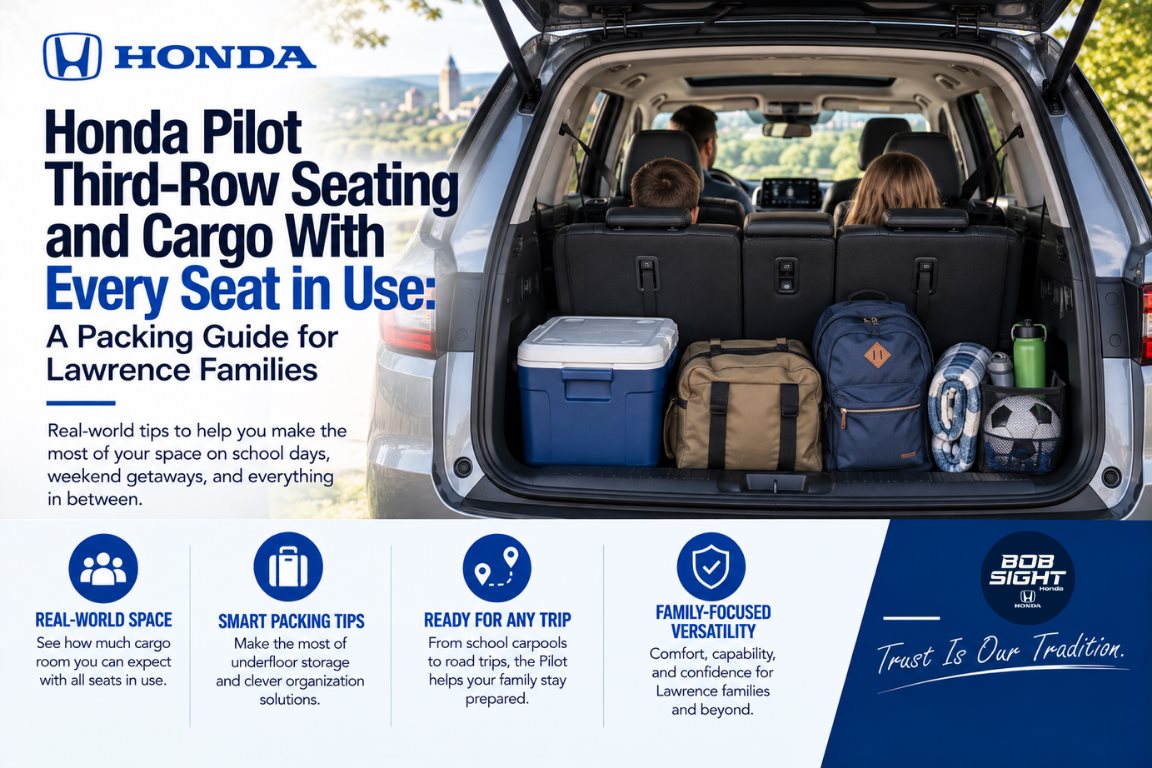
Honda Pilot Third-Row Seating and Cargo With Every Seat in Use: A Packing Guide for Lawrence Families
Explore Honda Pilot inventory at Bob Sight Honda
The most useful way to judge Honda Pilot cargo space is to leave the third row upright and bring the people and gear you normally carry. A cargo figure cannot tell a Lawrence family whether its particular stroller, sports bags, and weekend luggage will fit together. At Bob Sight Honda in Lawrence, Kansas, shoppers from Topeka, Eudora, Baldwin City, and surrounding communities can evaluate the Pilot as they would use it on a busy day. This guide focuses on third-row access, seating choices, and the cargo area that remains when all three rows are available for passengers.
In This Guide You’ll Learn
Use your household’s real passenger count and belongings to evaluate a specific Pilot.
- What Honda’s behind-the-third-row cargo measurement means
- How seven- and eight-passenger seating configurations differ
- Why third-row access matters when child seats are installed
- How to plan a full-passenger grocery run or road trip
- What to check before using cargo accessories or exterior storage
- How to conduct a useful family fit test at the dealership
Quick Facts About Pilot Seating and Cargo
The cargo measurement to examine when every row is in use is the volume behind the upright third row. Figures quoted with the third or second row folded describe a different passenger arrangement. Honda’s published specifications for the 2026 Pilot list 18.6 cubic feet of standard cargo volume behind the third row, with a larger maximum figure that varies by trim and configuration.
- Passenger capacity: The 2026 Pilot seats seven or eight, depending on its seating configuration.
- Third-row cargo: Honda lists 18.6 cubic feet of standard volume behind the upright third row.
- Trim differences: The published maximum behind-the-third-row volume is 21.8 or 22.4 cubic feet, depending on trim.
- Second-row choices: The 2026 TrailSport has second-row captain’s chairs and seats seven; other trims have different seating arrangements.
- Fit is physical: Cargo volume does not guarantee that a particular stroller, cooler, suitcase, or pet carrier will fit.
These figures come from Honda’s published 2026 Pilot specifications. If you are shopping another model year, verify its specifications and equipment separately. For a family traveling from Lawrence to Topeka with every seat occupied, the practical question is how the actual bags fit behind the upright seats without interfering with passengers or the tailgate.
How Much Cargo Space Remains With the Third Row Upright?
With the third row upright, use Honda’s behind-the-third-row figure rather than the Pilot’s much larger maximum cargo figure. For the 2026 Pilot, Honda lists 18.6 cubic feet of standard cargo volume in that configuration. This is the relevant starting point when your seating plan requires all three rows.
Cargo volume is a measurement of available space, usually expressed in cubic feet. It does not describe the exact shape of the opening, the floor, or the space beneath a closed tailgate. Two families can bring the same number of bags and get different results because one uses soft duffels while the other uses rigid suitcases. A folded stroller may be short enough to lie across the cargo floor but too tall in a different position.
The published maximum behind-the-third-row measurement differs from the standard measurement and varies by 2026 Pilot trim. Honda lists maximum figures of 21.8 or 22.4 cubic feet, depending on the configuration. If that difference matters to your household, inspect the exact trim rather than assuming every Pilot has the same arrangement. Ask the team to demonstrate the cargo-floor positions and storage areas on the vehicle you are considering.
For a grocery run near Iowa Street, you may need space for bags and a stroller. For a weekend trip toward Clinton Lake, you might substitute a cooler and outdoor gear. Make separate packing lists for those trips because the combined load can differ substantially. The most demanding trip you make regularly is a better test of fit than an empty cargo-area photo.
Keep passenger space and cargo space as separate requirements. Folding part of the third row can create more room when fewer passengers travel, but it does not solve a packing problem on a trip where every seat is needed. Test the full-passenger arrangement first. Treat the ability to fold seats as flexibility for other days.
Which Pilot Seating Configuration Fits Your Passenger Count?
Count the people you regularly carry before choosing between a seven- and eight-passenger Pilot configuration. Both offer three rows, but the second-row arrangement affects the total number of seats and how passengers reach the back. Check the equipment on the exact model year and trim you are shopping.
Honda lists the 2026 Pilot TrailSport with second-row captain’s chairs and seating for seven. Honda also describes an available stowable second-row center seat on other Pilot trims, allowing an eight-seat configuration when that seat is installed. Removing a center seat changes the number of usable seating positions. A household that regularly travels with eight people needs to evaluate the vehicle with all eight seating positions in place.
A seven-passenger layout may appeal to a family that values a path between the second-row seats. An eight-passenger layout provides an additional seat when everyone travels together. Neither choice automatically creates a larger cargo area behind the third row. Their most important difference for this discussion is how the second row supports your passenger plan and access to the back.
Imagine a Lawrence family taking six children and adults to an event in Topeka. They need to confirm not only the seat count but also who will sit in each position and how everyone will enter. If the family usually carries seven but sometimes needs eight, that occasional trip still deserves consideration. Work through the actual passenger list rather than relying on the label “three-row SUV.”
Honda lists the 2026 seating configurations in its Pilot model information. Equipment can differ by model year, trim, and individual vehicle. When you visit Bob Sight Honda, sit in the second and third rows of the Pilot you are considering. Confirm that its seat arrangement works while the third row remains available and the cargo area holds your typical load.
How Does Third-Row Access Work With Child Seats?
Test third-row entry with your child seats in their intended positions before deciding that a Pilot layout works for your family. A second-row seat that moves easily when empty may function differently in your daily routine once a child restraint is installed. Passenger access should be evaluated with the vehicle set up as you will actually use it.
Honda describes one-touch second-row seats that assist access to the Pilot’s third row. During a test, have the people who will normally sit in the back enter and exit several times. Check whether they can reach their seats comfortably and whether the second-row arrangement leaves a practical path. Do this with an adult supervising children, rather than assuming a single demonstration captures a busy school pickup.
Child-restraint placement requires a separate safety check. NHTSA advises families to read both the child seat’s instructions and the vehicle owner’s manual for approved installation methods and seating positions. Anchor locations, seat-belt use, and restraint limits should be verified for the specific Pilot and child seat. Do not assume every position has the same anchors or that every child seat fits equally well in every row.
For a Douglas County family, think through who enters first during a typical morning. A child in a third-row booster, a younger child in a second-row restraint, and bags going into the rear may require a particular loading order. Try that order while parked. Make sure the final seating setup follows the applicable manuals and keeps access workable for the people who will use it.
If your family uses more than one child restraint, bring the actual seats to a fit appointment if practical. Ask to examine the specific Pilot trim, then follow the manuals when checking placement. A seating-capacity number tells you how many designated positions exist. Your real configuration determines whether the vehicle fits your household.
How Should You Pack When Every Seat Is Occupied?
Pack the cargo area behind the upright third row using the items you need most often, and test the complete load before a trip. Start with the largest essential item because its shape may determine where everything else can go. Then add smaller bags while keeping the tailgate’s closing path and rear visibility in mind.
A soft-sided bag may be easier to arrange around a folded stroller than a rigid suitcase of similar volume. A cooler may fit across the floor but prevent other items from sitting flat. Check each item’s dimensions and orientation instead of assuming a cubic-foot figure predicts the result. If a pet carrier is part of your plan, bring its actual dimensions and evaluate its proper placement separately.
Use the vehicle’s storage features as intended and follow the owner’s manual for cargo loading. Do not place loose, heavy objects where they could move into passenger space during sudden braking. Keep items from obstructing passengers, seat belts, or the driver’s view. Confirm that the tailgate closes normally rather than pressing against a stack of luggage.
Consider a family leaving Lawrence for a weekend with seven passengers. Their load might include several overnight bags, a compact stroller, and equipment for an activity. Make a list of the items that must ride inside the vehicle, then identify which ones can be reduced or replaced with smaller versions if the cargo area becomes crowded. This is a practical packing decision, not a promise that a specific combination will fit every Pilot.
Exterior cargo accessories may be worth researching if you regularly need more room with every seat occupied. Honda offers accessories for certain Pilot configurations, but an accessory’s compatibility, loading limits, and installation requirements need to be checked for the exact vehicle. Do not count on an accessory until you confirm that it suits your equipment and intended load. For occasional trips, first test whether a different bag arrangement meets your needs.
What Changes When You Fold Part of the Third Row?
Folding part of the third row can create cargo flexibility when you do not need every seating position. It is useful for days with fewer passengers, but it changes the seating plan. Compare your full-passenger trip with your everyday trip before deciding how often you would use that option.
A family that usually carries four or five people may be able to prioritize cargo on most days and bring the third row into use for carpools. Another family may have seven passengers on nearly every outing. Those households are asking different questions of the same SUV. The second household should judge cargo room primarily with the third row fully upright.
For example, a Baldwin City household might travel into Lawrence with a smaller group for errands, then carry additional relatives on a weekend trip. The errands may allow folded seats and bulky purchases. The group trip requires the seats restored and belongings packed behind them. Test both arrangements to learn whether the Pilot supports the trips that matter most.
Seat-folding demonstrations also help reveal how easy the vehicle will be to use. Ask to operate the third-row seatbacks on the Pilot you are considering and return them to their normal position. Check that passengers have the space and access they need after the seats are raised again. Follow the vehicle’s instructions when changing seat configurations.
Online photos often emphasize the maximum cargo area with rear seats folded. That image can be useful when comparing furniture-hauling or two-person travel needs. It does not represent available space for an eight-person outing. Keep both configurations in your notes and label them clearly so you do not compare unlike measurements.
How Can You Test Your Family’s Fit at Bob Sight Honda?
Bring a passenger plan and the bulky items you actually use to evaluate a specific Pilot in person. A family fit test answers questions that published volume and seating figures cannot. It also helps you compare trims without guessing how a stroller or bag will sit behind the third row.
- Count your passengers. Include the largest group you expect to carry regularly, and assign each person a seating position.
- List essential cargo. Identify the stroller, luggage, sports gear, mobility equipment, or other items that must travel on that same trip.
- Check the second row. Confirm the installed seating arrangement and practice third-row entry with the setup your family expects to use.
- Raise the entire third row. Evaluate cargo room with every required passenger seat available.
- Place the actual items inside. Check their orientation, cargo access, rear visibility, and whether the tailgate closes normally.
- Repeat for a second scenario. Test an everyday errand or school trip separately from your full-passenger road trip.
Call ahead if you want to inspect a particular configuration in Bob Sight Honda’s Pilot inventory. Availability and equipment can change, so confirm the vehicle you plan to see. Ask which model year and trim will be ready for your visit. That matters if a specific second-row seat arrangement is central to your decision.
Take measurements of a stroller or other large item before you leave home if bringing it is inconvenient. Note its folded length, width, and height, including wheels or handles that protrude. Measurements help narrow the question, although placing the actual item inside remains the clearest test. A family coming from Topeka can use those notes to make a dealership visit more productive.
Finally, have each likely passenger sit in the position they would use. Check legroom, entry, seat-belt access, and how the cabin feels with everyone aboard. The third-row legroom published for the 2026 Pilot is 32.5 inches, but comfort is personal and depends on the people and seats involved. A hands-on check provides the context that the measurement cannot.
How Should Lawrence Families Plan for Regular Ownership?
Choose a Pilot configuration that works for your recurring full-passenger trips, then plan maintenance around how your household drives. A layout that functions only when the third row is folded may frustrate a family that needs that row every day. Build your ownership plan around the most demanding trip you make often.
Passenger and cargo needs can change over time. A stroller may give way to sports equipment, while school carpools may increase the number of people you carry. Think about the next few years as well as the current season. If flexibility is important, compare how the specific seating arrangements support both your usual group and occasional guests.
Regular travel along K-10, I-70, or US-59 adds different kinds of driving to short trips around Lawrence. Follow the maintenance guidance for the exact Pilot model year you own and pay attention to vehicle alerts and tire condition. A full cabin and loaded cargo area do not change the need to follow the vehicle’s stated loading limits. Consult the owner’s manual before carrying unusually heavy gear or adding exterior cargo equipment.
Protect the usability of the cargo area too. Keep the space organized enough that essential items remain accessible, and check that passengers can enter and leave safely after each change in packing. When seasonal gear changes, repeat the load test rather than assuming the winter arrangement fits like the summer one. Small changes in bag shape or equipment can affect the result.
Bob Sight Honda’s service department can support ongoing Honda maintenance in Lawrence. Keep a record of your vehicle’s service and consult the owner information for questions about seating mechanisms, cargo loading, and accessories. The goal is a Pilot that continues to fit both your passengers and the work you ask it to do.
Frequently Asked Questions About Pilot Third-Row Seating and Cargo
How much cargo space does a 2026 Honda Pilot have with the third row up?
Honda lists 18.6 cubic feet of standard cargo volume behind the upright third row of the 2026 Pilot. Its published maximum figure behind that row is either 21.8 or 22.4 cubic feet, depending on trim and configuration. Check Honda’s specifications for the exact vehicle you are considering. Figures for other model years may differ.
A cubic-foot measurement describes volume, not the shape of the available area. A rigid suitcase may fit differently from several soft bags with the same combined volume. The cargo opening and the way an item folds also matter. Test your largest essential item with the third row upright.
For a Lawrence family traveling to Topeka with all three rows occupied, the behind-the-third-row measurement is the useful reference. A much larger figure with seats folded describes a different trip. Bring the bags you would actually pack if possible. That will give you a clearer answer than a volume figure alone.
Does every Honda Pilot seat eight people?
No. The 2026 Pilot has seven- and eight-passenger seating configurations. Honda lists the TrailSport with second-row captain’s chairs and seating for seven. Other 2026 configurations can seat eight, depending on the installed second-row arrangement. Verify the exact model year and trim before relying on a stated seat count.
A stowable second-row center seat is available on specified Pilot trims. When that seat is removed, it is no longer a usable passenger position. The seating arrangement also affects how people move into the third row. Ask for a demonstration using the specific vehicle you plan to buy.
If you regularly transport eight people from Baldwin City into Lawrence, count all eight seating positions during your visit. Have the passengers enter and sit where they would normally ride. Then check the cargo area with those seats in use. This tests the complete trip rather than seating capacity alone.
Can I use the third row if child seats are installed in the second row?
Third-row access depends on your actual child-seat placement and the Pilot’s seating configuration. Test the arrangement with the seats your family uses. A second-row access feature should not be assumed to work the same way once a restraint is installed. Follow the instructions for both the vehicle and each child seat.
NHTSA recommends reading the child-seat manual and the vehicle owner’s manual to determine appropriate installation methods and positions. Check anchors, seat-belt routing, and restraint requirements for the exact seating position. If you need installation help, a trained child passenger safety technician can assist. Do not make a seating decision based only on a showroom demonstration with empty seats.
A family managing school pickups in Lawrence may need one child to reach the third row while another rides in a second-row restraint. Recreate that routine while the vehicle is parked. Check how an adult will help both children enter and buckle. A layout that is convenient for your actual morning routine is more useful than one that looks spacious in a photo.
Will a stroller and luggage fit behind the Pilot’s third row?
The answer depends on the dimensions and shape of your stroller and luggage. Honda’s cargo-volume figure does not guarantee that a particular combination of items will fit. Fold the stroller as you normally would and measure any protruding wheels or handles. Test the full load with the third row upright.
Start with the stroller, then add the bags you would bring on the same trip. Try practical orientations without forcing the tailgate shut or placing loose items near passengers. Soft bags may offer more packing flexibility than rigid cases. Keep essential items accessible if you expect to stop during the drive.
For a weekend departure from Lawrence with every Pilot seat occupied, bring a realistic packing list to the dealership. Include the items that cannot stay home, rather than testing one bag at a time. If your regular load does not fit safely, you need to know that before choosing a configuration. The hands-on test gives your family a vehicle-specific answer.
Find the Pilot Configuration That Fits Your Whole Trip
Evaluate the Honda Pilot with your passengers seated and your essential gear loaded at the same time. That is the clearest way to judge third-row usefulness for a Lawrence family. Official seating and cargo measurements help you prepare, while a real fit test shows how the specific vehicle works for your household.
Think through a typical school day and a full-passenger trip toward Topeka, Eudora, or the Kansas City area. Those outings may require different seating and cargo arrangements. Identify the one that places the greatest demand on the vehicle and test it first. Then explore how the seats adapt for lighter days.
Bob Sight Honda in Lawrence can help you examine available Pilot configurations and demonstrate their seating and cargo features. Bring your questions, passenger count, and largest gear measurements. A careful visit will help you choose based on the trips your family actually makes.
Helpful Links
- Browse new Honda Pilot inventory
- Explore used vehicle inventory
- Ask about Honda parts and accessories
- Start a trade-in estimate
- Explore Honda service resources
Proud to Be Part of the Bob Sight Auto Group
Bob Sight Honda serves families in Lawrence, Kansas, and nearby communities including Topeka, Eudora, Baldwin City, and Ottawa. As part of the Bob Sight Auto Group, our dealership is connected to a family of automotive stores across Kansas and Missouri. Each location helps drivers explore vehicles and services suited to their own needs.