Honda Ridgeline In-Bed Trunk and Dual-Action Tailgate: A Gear-Loading Guide for Lawrence Drivers
Explore New Honda Ridgeline Inventory at Bob Sight Honda
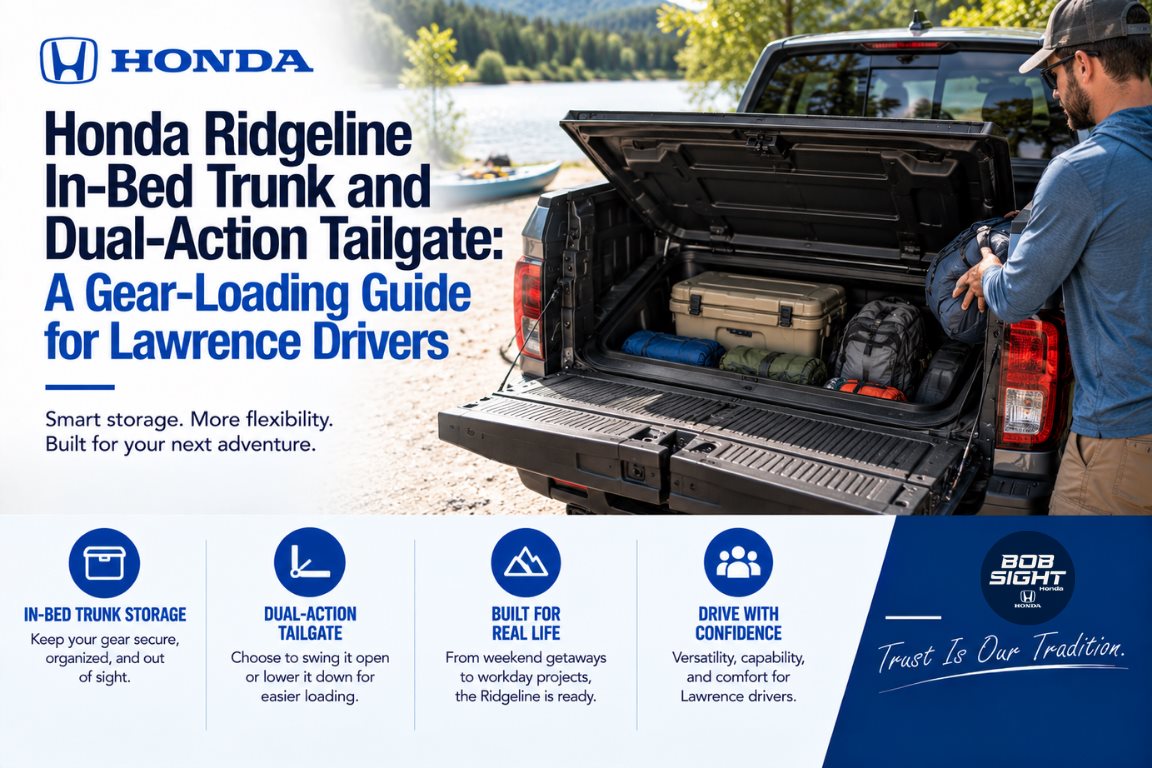
The Honda Ridgeline gives Lawrence drivers three useful places to put their gear: the open truck bed, a lockable In-Bed Trunk, and the cabin. Its dual-action tailgate makes it easier to reach the bed and trunk in different loading situations. If you regularly carry groceries, sports equipment, tools, or supplies for a weekend near Clinton Lake, understanding how these spaces work together can help you decide whether the Ridgeline fits your routine.
At Bob Sight Honda in Lawrence, KS, shoppers from Eudora, Baldwin City, Topeka, and across Douglas County often want more than a bed measurement. They want to know where wet gear goes after a trip, whether they can reach a bag without climbing into the bed, and how to keep smaller items from sliding around. This guide answers those practical questions while explaining which details to check on a specific truck before you buy.
In This Guide You’ll Learn
The best loading plan depends on an item's size, weight, exposure to weather, and how soon you will need it again.
- How the Ridgeline's lockable In-Bed Trunk differs from its open bed
- When to swing the dual-action tailgate sideways or fold it down
- How to organize groceries, sports gear, tools, and outdoor equipment
- What to consider before loading large or heavy materials
- How to inspect the trunk and tailgate during a test drive in Lawrence
- How to care for the cargo areas through changing Kansas seasons
How the In-Bed Trunk Changes Everyday Loading
The Honda Ridgeline's In-Bed Trunk is a lockable storage compartment built beneath the bed floor. On the 2026 Ridgeline, Honda lists its capacity at 7.3 cubic feet and includes a drain plug. It gives drivers a place for smaller cargo that they might not want loose in the open bed, while leaving the bed available for larger items.
That separation is useful on an ordinary shopping trip. Imagine stopping for groceries along South Iowa Street before picking up a bag of soil for a project at home. Grocery bags can go into the trunk, while the soil stays in the bed. The arrangement makes it easier to keep food away from dirt and reduces the need to put everything on a passenger seat. You still need to close and latch the trunk properly before driving.
The trunk can also help when your plans change during the day. A Lawrence driver might carry work supplies in the morning, stop near the University of Kansas in the afternoon, and load recreation gear for the weekend later on. Smaller belongings have a dedicated compartment instead of taking up the whole bed. As with any vehicle storage area, avoid leaving valuables unattended simply because a compartment locks.
Capacity is only part of the fit question. A bulky object might have a volume smaller than 7.3 cubic feet but still fail to pass through the trunk opening. If you have a cooler, tool case, stroller accessory, or sports bag you carry often, measure its outside dimensions and check the opening in person. The trunk works best when the items you use frequently fit through its opening and can be lifted out comfortably.
When to Swing the Tailgate Sideways or Fold It Down
The Ridgeline's dual-action tailgate opens in two ways: it folds down like a conventional pickup tailgate or swings to the side. Folding it down creates familiar access for loading cargo into the bed. Swinging it sideways lets you stand closer to the bed floor and reach the In-Bed Trunk more directly.
For small, frequent stops, the side-opening position may be the easier choice. If you have a couple of grocery bags in the trunk, you can reach in without leaning across a lowered tailgate. That difference can be noticeable after several errands around Lawrence, such as a stop on 23rd Street followed by a pickup near downtown. It also makes it easier to see and reach smaller items near the back of the bed.
When you are placing a longer item into the bed, lowering the tailgate may provide the access you expect from a pickup. You can approach the bed from directly behind and position the load before securing it. Follow the owner's manual for any load that extends beyond the closed bed, including limits, support, and securement requirements. Do not assume the tailgate can support a particular item simply because it opens downward.
Before opening the tailgate in either direction, look at the space around the truck. A side-swinging gate needs room beside and behind it, while a lowered gate needs clearance directly to the rear. Parking spaces, walls, trailers, and nearby vehicles can affect which opening is practical. During a visit to Bob Sight Honda, try both motions with the truck parked in a normal space so you can judge them against your everyday stops.
Where Should Groceries, Sports Gear, and Tools Go?
Put smaller items that benefit from enclosed storage in the In-Bed Trunk, larger or dirty items in the bed, and delicate items in the cabin when appropriate. This is a starting point rather than a rule for every load. Size, weight, temperature, moisture, and how quickly you need an item all affect the best location.
For a grocery run, the trunk can keep bags together and separate from an open-bed load. Check that nothing prevents the lid from closing, and keep temperature-sensitive food in appropriate conditions during longer stops. If you are also transporting a large purchase from a Lawrence home improvement store, the bed can hold that item while the groceries remain apart. A storage compartment helps organize a trip, but it does not replace safe food handling or proper cargo securement.
For youth sports or a day outdoors, consider which items will be muddy or wet on the way home. Shoes, balls, and washable gear may be easier to separate from clean cabin items. Honda notes that the trunk's drain plug allows it to be used for wet gear, but you should empty standing water and dry the compartment afterward. At Clinton Lake or a sports field in Douglas County, that simple separation can make the return trip more comfortable for passengers.
For tools, start with their size and weight. A compact tool case may fit in the trunk, while long-handled equipment belongs in the bed with suitable restraints. Loose tools can shift during braking, so a closed compartment is not a substitute for sensible packing. If you carry valuable equipment, assess where you will park and how long the truck will be unattended. You can also ask the Bob Sight Honda team about available Honda accessories for your specific Ridgeline.
A Step-by-Step Packing Plan for a Lawrence Weekend
Pack the Ridgeline by deciding what must stay clean, what can ride in the open bed, and what you will need first at your destination. Doing this before you leave makes the trunk and dual-action tailgate more useful. It also reduces the chance that a heavy item ends up on top of something fragile.
- List the load before you start. Separate bags, outdoor gear, food, and larger equipment. Check whether anything is wet, sharp, fragile, or difficult to lift.
- Choose a place for each item. Use the In-Bed Trunk for smaller items that fit and benefit from enclosed storage. Reserve the bed for bulky cargo that can be secured properly.
- Place heavy items thoughtfully. Follow the vehicle's loading guidance, keep the load stable, and use appropriate tie-downs in the bed. Check the specific truck's payload information before carrying a heavy load.
- Pack for the first stop. Put the items you will need on arrival where you can reach them without unloading everything else.
- Close and check every opening. Confirm the trunk lid and tailgate are latched, the load cannot shift, and nothing blocks visibility or vehicle lighting.
For example, a family leaving Lawrence for an afternoon near Clinton Lake might put compact clean supplies in the trunk and secure larger recreation equipment in the bed. On the return trip, they can reassess the load if some gear has become wet or sandy. This is a planning example, not a claim that every cooler, bicycle, or piece of equipment will fit a particular Ridgeline configuration. Bring measurements for your own gear if fit will determine your purchase.
The last check matters even on a short drive. A bag that seems stable while parked can move when you turn onto K-10 or brake for traffic. Use the cargo restraints recommended for the vehicle, and stop safely to adjust a load if you hear or feel it shifting. Good organization makes unloading easier, but keeping cargo secure is the priority.
How to Check Whether Large Items Fit in the Bed
Measure the item you plan to carry, then check the usable bed space and loading opening on the specific Ridgeline. Honda describes the 2026 bed as a lay-flat design with minimal wheelwell intrusion and notes that it can accommodate 4-by-8-foot sheets of plywood. How a sheet or another long item must be positioned and secured is a separate question that depends on the load and the vehicle's instructions.
A flat sheet, boxed furniture, and a bicycle present different fit problems. A sheet may need adequate width and support, while a tall box needs clearance and a way to prevent tipping. A bicycle's handlebars or wheels may determine whether it can be placed where you want it. Before visiting a store around Lawrence or Topeka, record the item's full dimensions, including packaging, and think about how you will lift it into the bed.
Payload is another important term. Payload is the weight the truck can carry, including occupants and cargo, within its rated limits. Bed dimensions tell you whether something may physically fit; they do not tell you whether the vehicle can safely carry its weight. Check the specific vehicle's loading label and owner's manual, and account for passengers, accessories, and everything else in the truck before planning a heavy haul.
Finally, plan how to hold the item in place. The Ridgeline's bed is useful for project materials, but cargo still needs proper restraint for the drive home on US-59, K-10, or local streets. Do not rely on friction or the weight of an item alone. If the load is unusually long, tall, or heavy, review the owner's manual and relevant road requirements before traveling. A quick measurement at home can prevent a difficult decision in a busy parking lot.
In-Bed Trunk, Open Bed, or Rear Cabin: Which Fits Your Trip?
Choose the In-Bed Trunk for smaller enclosed storage, the open bed for secured bulky cargo, and the rear cabin for items that should stay with passengers. The Ridgeline also has a 60/40 split lift-up rear seat, which can create room inside for certain items when that seating space is not needed. Each choice has a different tradeoff in access, exposure, and passenger space.
The trunk is convenient when you want to separate smaller items from a dirty bed load. Its 7.3-cubic-foot capacity is useful, but its opening and shape determine whether your particular item fits. The bed offers more room for large equipment, although anything carried there needs suitable securement and may be exposed to weather. The rear cabin offers an enclosed area for appropriate items, but raising a seat cushion changes where a passenger can sit.
Picture a weekday drive from Eudora to Lawrence with two passengers, a laptop bag, and supplies for an evening project. The laptop may be better placed in the cabin when attended, while project supplies may go in the trunk or secured bed depending on their size and condition. If the rear seats are occupied, you cannot count on lifting them for extra cargo room. Deciding where each item goes before the trip helps you preserve the seating you need.
For shoppers comparing a pickup with an SUV, this is a useful test. The Ridgeline lets you separate an open cargo area from passengers while still offering an enclosed trunk and flexible rear seating. An SUV offers a different type of enclosed cargo space. Neither layout fits every routine equally well. Think through three trips you make often, then see whether the Ridgeline's three storage areas make those trips easier.
What Changes When Gear Is Wet, Sandy, or Muddy?
Wet and dirty gear calls for a loading plan that protects clean items and leaves time to clean and dry the truck afterward. Honda says the Ridgeline's In-Bed Trunk has a drain plug and can hold wet gear or function as an ice chest. The drain is useful for emptying water, but owners still need to remove debris and let the compartment dry.
After a rainy event in Baldwin City or a day near Clinton Lake, sort the load before putting it away. Keep items that could leak or shed mud apart from bags you want clean. Shake off heavy debris where appropriate, then decide whether the trunk or secured open bed is better for the trip home. If gear is too large for the trunk, do not force the lid closed over it. The bed provides another option, provided the load is secure.
If you use the trunk for ice and drinks, empty it through the drain according to the owner's manual and clean it before returning it to everyday storage. Check for packaging, sand, or other material that might remain near the drain. An enclosed space that stays damp can develop an odor, so allow it to dry before storing equipment long term. These small habits help keep the trunk ready for the next grocery run.
Kansas weather can also change during a drive between Lawrence and Topeka. Items left in an uncovered bed may get wet if a storm develops, while enclosed storage can be useful for suitably sized gear. Honda describes the In-Bed Trunk as weatherproof, but inspect the lid and seals on the particular truck and close it as directed. For electronics or other highly moisture-sensitive belongings, use the protection appropriate to the item and the conditions.
How to Test the Trunk and Tailgate Before Buying a Ridgeline
Open, close, reach into, and measure the Ridgeline's cargo spaces during your dealership visit. A specification can tell you what the truck includes, but handling the tailgate and trunk yourself shows whether they suit your height, gear, and typical parking situations. This matters for shoppers who will use the storage features several times a week.
- Check both tailgate motions. Lower it, close it, then open it sideways. Notice how much room each position needs behind the truck.
- Inspect the trunk opening. Lift the lid, look at the compartment shape, locate the drain plug, and confirm you can reach the bottom comfortably.
- Compare your gear measurements. Use the dimensions of a real bag, case, or cooler you own. If practical, bring the item to the dealership for a fit check.
- Practice a normal loading sequence. Picture where groceries, sports gear, or project supplies would go and which opening you would use first.
- Review the specific truck. Confirm its features, accessories, loading label, and owner's manual guidance rather than assuming every listing is configured alike.
If you are arriving from Ottawa or De Soto, checking the vehicle listing and availability before the drive can make your visit more productive. Tell the Bob Sight Honda team which cargo questions matter most to you. A shopper carrying work equipment may need a different demonstration than a family transporting sports gear. You can also compare how the truck feels on local Lawrence roads once you have examined the bed.
Ask yourself whether the feature saves effort in your real routine. Can you lift a usual bag from the trunk without strain? Is there enough clearance to swing the tailgate in the places where you park? Can you reach the items you use most without moving a larger load? Specific answers to those questions are more useful than a general impression that a truck has plenty of space.
Quick Facts About Ridgeline Cargo Access
The Ridgeline's cargo features are designed to give drivers several ways to store and reach their gear. The best arrangement still depends on the size and weight of each load.
- The 2026 Honda Ridgeline has a lockable, 7.3-cubic-foot In-Bed Trunk.
- The In-Bed Trunk includes a drain plug.
- The dual-action tailgate folds down or swings open to the side.
- Side-opening access can make it easier to reach the trunk.
- The open bed is intended for larger cargo that must be secured properly.
- The 60/40 split lift-up rear seat provides another cargo option when seating needs allow.
- Bed space and payload are different: an item must both fit and stay within the truck's applicable weight limits.
These features can support errands around Lawrence, weekend trips across Douglas County, and project runs toward Topeka. Honda's 2026 Ridgeline model information describes the trunk, tailgate, and bed design. For a used Ridgeline or a particular new vehicle, confirm its model year, condition, and equipment in person.
Ownership Planning for Ridgeline Cargo Areas
Regular cleaning and inspection help the Ridgeline's trunk, bed, and tailgate stay useful over time. Cargo areas collect dirt even when the truck is used mainly for errands. A short check after a messy trip is easier than dealing with built-up debris later.
Remove loose material from the bed after carrying soil, mulch, or project supplies. Check that nothing obstructs the trunk lid or tailgate before closing them. If you have used the trunk for wet gear, drain and dry it, then make sure the plug is positioned according to the owner's manual. Inspect any cargo restraints you use, since worn or damaged equipment may no longer hold a load securely.
Seasonal use adds different demands around Lawrence. Winter roads can leave moisture and grime on gear, while summer recreation may bring sand or spilled drinks into the trunk. Clean the storage areas with methods appropriate for their materials and consult the owner's manual before using unfamiliar products. If a latch, hinge, seal, or drain does not appear to work as intended, have it inspected rather than forcing it.
Long-term planning also means reviewing how your cargo needs change. A family may start with sports bags and later need space for larger equipment. A homeowner may find that a few annual project trips require more careful planning than daily errands. Bob Sight Honda's service department can help with vehicle concerns, and its parts team can discuss applicable Honda accessories for a specific Ridgeline.
Frequently Asked Questions About Ridgeline Storage in Lawrence, KS
How much does the Honda Ridgeline In-Bed Trunk hold?
The 2026 Honda Ridgeline's In-Bed Trunk has a listed capacity of 7.3 cubic feet. It is a lockable compartment beneath the bed floor rather than a replacement for the full truck bed. Its shape and opening affect which individual items will fit. Check your particular model year if you are shopping used.
A capacity figure is helpful for understanding total space, but it cannot guarantee that a rigid case or cooler will pass through the opening. Measure the object's length, width, and height, including handles or wheels. Then compare those dimensions with the actual compartment. Avoid forcing the lid closed around an oversized item.
For Lawrence shoppers who carry the same equipment every week, an in-person fit check is worthwhile. A sports bag, compact tool case, or grocery load can tell you more than a photo of the empty trunk. You can examine a Ridgeline at Bob Sight Honda and try the loading motion yourself. That helps you judge both fit and ease of access.
Can I store wet gear in the Ridgeline's In-Bed Trunk?
Yes, Honda says the 2026 Ridgeline's In-Bed Trunk includes a drain plug and can be used for wet gear. The compartment can help separate damp items from passengers and clean belongings. Drainage does not remove the need to empty and clean the trunk. Let it dry before leaving equipment stored for an extended period.
Think about what is on the gear as well as how wet it is. Sand, grass, and mud can remain after water drains away. Remove loose debris and follow the owner's manual for cleaning and drain-plug use. Check that the lid closes correctly when you are finished.
This can be useful after a rainy youth sports event in Douglas County or an outing near Clinton Lake. Put items in the trunk only if they fit without blocking the lid. Keep anything that requires more protection in a suitable container or in an appropriate place inside the vehicle. Recheck the compartment when you get home rather than leaving damp gear there overnight.
What is the advantage of a side-opening tailgate near me in Lawrence?
The side-opening position lets you stand closer to the rear of the Ridgeline bed and reach its In-Bed Trunk more directly. With a conventional lowered tailgate, you would need to reach across the open gate. The sideways position can make frequent access to smaller items more comfortable. It still requires enough clearance to open safely.
The best position depends on the job. Swinging the gate sideways may help when retrieving bags from the trunk, while folding it down can be useful for loading cargo into the bed. Check for nearby walls, vehicles, and other obstacles before choosing either position. Always close and latch the gate before driving.
During a typical Lawrence errand route, you might open the trunk several times without needing to unload the bed. Try the side-opening action while parked at Bob Sight Honda and compare it with your usual parking spaces. Your reach and the items you carry will determine how much the feature helps. A hands-on demonstration is more useful than choosing based on the feature name alone.
Can the Ridgeline carry plywood and other home-project materials?
Honda describes the 2026 Ridgeline's lay-flat bed as able to accommodate 4-by-8-foot sheets of plywood. That does not mean every material can be carried in the same way. Weight, thickness, shape, and the number of sheets all matter. Check the vehicle's loading guidance and secure the material before driving.
Measure packaged materials as well as bare materials, since packaging can change the fit. Review the specific truck's payload information, which accounts for more than cargo in the bed. Passengers and other items also contribute to the total vehicle load. Never treat physical fit as proof that a load is within the vehicle's weight limits.
If you are picking up materials in Lawrence and driving them to Eudora or Baldwin City, plan the return trip before you leave the store. Bring suitable restraints and follow the owner's manual for loading guidance. If the load extends beyond the bed, review applicable requirements before traveling. When a project exceeds the Ridgeline's safe carrying limits, arrange another way to transport it.
Should I test the In-Bed Trunk when shopping for a used Honda Ridgeline?
Yes. Open and close the trunk, operate both tailgate positions, and inspect the cargo areas on any used Ridgeline you are considering. Features and condition can vary by model year and individual vehicle. Confirm that the lid, latches, and drain operate as intended. Review the vehicle's equipment and owner's manual rather than relying on a general model description.
Look for signs of standing water, excessive debris, or damage that could interfere with normal use. Check the seals and the areas around the trunk opening. If you have questions about operation or condition, ask for them to be addressed before deciding. Bring the dimensions of any item you expect to carry regularly.
For shoppers visiting Bob Sight Honda from Topeka, Ottawa, or elsewhere near Lawrence, checking a specific listing before the trip can save time. Ask which Ridgeline is available to inspect and whether you can try your typical loading setup. A careful cargo-area check helps you evaluate the vehicle you would actually drive home. It also makes a later test drive more focused.
Find a Ridgeline That Fits Your Lawrence Routine
The Ridgeline's In-Bed Trunk and dual-action tailgate are most valuable when they solve loading problems you encounter regularly. They can help separate smaller belongings from a larger bed load and give you two ways to reach cargo. The right question is whether your own bags, equipment, and parking spaces work well with those features.
Bob Sight Honda in Lawrence can help you inspect available Ridgeline models and compare the cargo layout with your needs. If you travel from Eudora, Baldwin City, Topeka, or elsewhere in Northeast Kansas, bring measurements or examples of the gear you carry most often. Check the trunk opening, try both tailgate positions, and review the specific truck's loading information. That visit can turn a feature description into a practical decision.
Buying and servicing locally also gives you a nearby place to ask questions as your routine changes. Whether the Ridgeline will handle school activities, home projects, or weekends around Douglas County, thoughtful loading and regular care will help you use its storage areas well. Start with the trips you take most often, then choose the truck that makes those trips easier.
Helpful Links
- Shop New Honda Ridgeline Inventory
- Explore Used Vehicle Inventory
- Ask About Honda Parts and Accessories
- Learn About Honda Service
- Schedule Honda Service
Proud to be part of the Bob Sight Auto Group
Bob Sight Honda serves drivers in Lawrence, Kansas, and nearby communities throughout Douglas County and Northeast Kansas. As part of the Bob Sight Auto Group, our team helps shoppers and owners find vehicles, service, and support that fit their daily lives. Trust Is Our Tradition.