Honda Ridgeline vs Toyota Tacoma for Kansas Truck Owners: Which Pickup Makes More Sense?
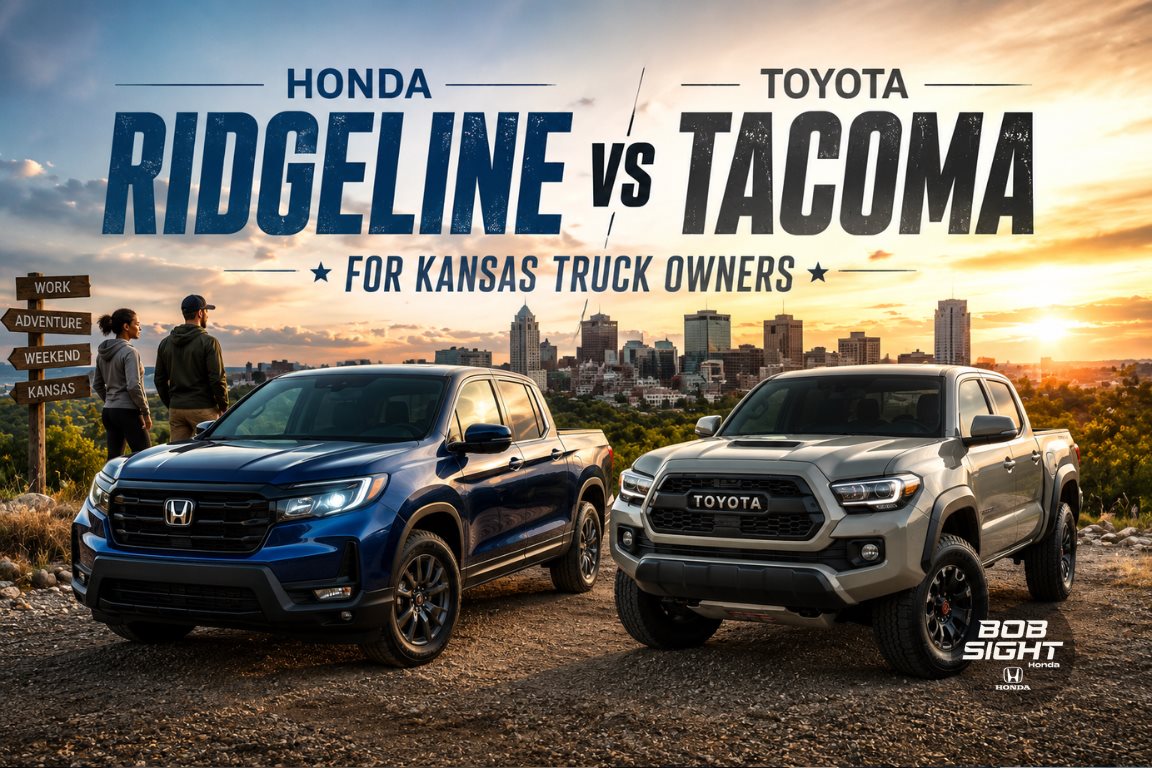
Browse Honda Ridgeline inventory at Bob Sight Honda in Lawrence, KS
Kansas truck owners comparing the Honda Ridgeline vs Toyota Tacoma are often looking for more than towing numbers or off-road styling. They want a pickup that fits real life in Lawrence, Topeka, Baldwin City, Eudora, and the greater Kansas City Metro. From daily commuting on K-10 to weekend home projects, family travel, tailgating trips, and Midwest weather driving, the right truck needs to balance comfort, capability, efficiency, and long-term ownership confidence.
The Honda Ridgeline and Toyota Tacoma are both popular midsize trucks, but they approach truck ownership differently. The Ridgeline focuses heavily on comfort, smooth road manners, practical utility, intelligent storage, and family-friendly driving. The Tacoma leans harder into rugged off-road identity and traditional truck design. For many Kansas drivers, the decision comes down to how the truck will actually be used every day rather than what looks most aggressive on paper.
This detailed comparison explains how the Honda Ridgeline and Toyota Tacoma compare in areas that matter most to northeast Kansas drivers. Whether you commute to Kansas City, tow recreational equipment, navigate winter weather around Douglas County, or simply want a versatile truck for work and family life, this guide breaks down the real-world ownership differences between these two popular pickups.
In This Guide You’ll Learn
This guide compares the Honda Ridgeline and Toyota Tacoma from the perspective of real Kansas truck ownership and everyday usability.
- How the Honda Ridgeline and Toyota Tacoma compare for daily driving comfort
- Which truck works better for Kansas commuting and highway travel
- Differences in cargo space, bed utility, and interior flexibility
- How winter weather and Midwest road conditions affect ownership
- What families and weekend travelers should consider
- How maintenance and ownership experiences differ
- Which truck makes more sense for most Lawrence-area drivers
How the Honda Ridgeline and Toyota Tacoma Approach Truck Ownership Differently
The Honda Ridgeline and Toyota Tacoma are built with very different philosophies, which is why Kansas truck shoppers often have a strong preference once they understand how each truck behaves in everyday driving. The Ridgeline is designed to blend truck capability with SUV-like comfort, while the Tacoma leans more heavily into traditional body-on-frame truck construction and off-road identity.
The Honda Ridgeline uses a unibody platform, which is similar to how many SUVs are engineered. This helps create a smoother ride quality, quieter cabin experience, and more stable handling during daily commuting. For drivers traveling between Lawrence and Kansas City on K-10 or I-70, that smoother driving experience becomes noticeable quickly. The Ridgeline feels refined on longer drives, absorbs rough pavement effectively, and handles more like a comfortable SUV than a rugged work truck.
The Toyota Tacoma uses a more traditional body-on-frame truck design. Many truck enthusiasts appreciate this setup because it delivers a more rugged feel and supports stronger off-road branding. However, that construction style can also create a firmer ride quality on uneven roads and during highway commuting. Around northeast Kansas, where drivers often encounter potholes, road construction, gravel routes, and changing pavement conditions, some owners may notice that the Tacoma feels stiffer during everyday driving.
For many local buyers, the biggest question is how the truck will actually be used most of the time. If the truck serves as a commuter vehicle, family transportation solution, weekend travel companion, and occasional utility vehicle, the Ridgeline often feels easier to live with daily. If the truck’s primary appeal centers around rugged off-road styling and traditional truck personality, the Tacoma may align more closely with that preference.
Drivers from Lawrence, Topeka, Baldwin City, and Eudora frequently prioritize comfort because they spend substantial time behind the wheel. Highway commutes, school activities, shopping trips, road travel, and weather changes all shape how a truck feels over years of ownership. That is where the Ridgeline’s more refined design philosophy becomes a major strength.
Which Truck Drives Better Around Lawrence and Kansas City?
For most Kansas drivers who spend significant time commuting or traveling on highways, the Honda Ridgeline generally delivers the smoother and more comfortable driving experience. Ride quality matters more than many shoppers expect because trucks are often used for daily transportation rather than occasional hauling alone.
The Ridgeline’s steering response, cabin quietness, and road stability help reduce fatigue during longer drives between Lawrence and the Kansas City Metro. Drivers commuting on K-10 often deal with traffic flow changes, construction zones, merging lanes, and varying pavement conditions. The Ridgeline handles these situations with more confidence and composure than many midsize trucks because it feels planted and predictable during highway driving.
Another advantage for the Ridgeline is cabin noise reduction. Wind noise and road vibration are better controlled, which becomes important during longer commutes or family travel. Parents driving children to sports tournaments, families heading toward Clinton Lake, or commuters spending multiple hours each week on highways may appreciate a quieter interior that supports easier conversation and less driver fatigue.
The Tacoma’s driving experience is more rugged and upright. Some drivers enjoy this because it reinforces the feeling of driving a traditional truck. However, others may find the ride firmer during rough pavement transitions or extended commuting. Stop-and-go traffic near Iowa Street, downtown Lawrence, or congested Kansas City Metro routes can feel less refined in a truck that prioritizes ruggedness over comfort.
The Ridgeline also benefits from more confident on-road handling during wet weather. Rainstorms across northeast Kansas can quickly change road conditions, and the Ridgeline’s more SUV-like driving characteristics help it remain stable during highway travel and lane changes. For many Kansas owners, this balanced driving personality makes the Ridgeline easier to trust year-round.
Drivers who regularly use their truck as both transportation and utility often discover that comfort becomes more important over time. A smoother daily experience can influence long-term satisfaction just as much as towing numbers or off-road appearance. That is one reason many Lawrence-area shoppers end up preferring the Ridgeline once they test drive both trucks back-to-back.
Honda Ridgeline Interior Comfort vs Toyota Tacoma Interior Practicality
The Honda Ridgeline stands out for interior comfort, passenger space, and intelligent storage design, while the Toyota Tacoma emphasizes a more rugged cabin personality. For Kansas families and commuters, the Ridgeline’s interior flexibility often becomes one of its biggest advantages.
The Ridgeline provides spacious rear seating that feels more accommodating during longer drives. Families traveling between Lawrence and Topeka or heading toward the Kansas City Metro for weekend activities may appreciate the rear passenger room and easier entry. The cabin design feels open and practical rather than cramped or overly truck-focused.
Storage solutions are another Ridgeline strength. The truck bed trunk is one of the most unique features in the midsize truck segment because it provides lockable hidden storage beneath the bed floor. This is useful for tools, sports equipment, emergency gear, groceries, tailgating supplies, or travel bags. Kansas drivers who deal with changing weather conditions often appreciate having secure, weather-protected storage available without sacrificing bed space.
The Ridgeline’s interior also feels more refined for everyday life. Controls are easy to reach, visibility is strong, and cabin materials feel designed around long-term comfort. Drivers commuting daily around Douglas County or traveling regularly on highways often value ergonomics more after several months of ownership than they did during the initial shopping process.
The Tacoma interior focuses more heavily on rugged styling cues and upright truck positioning. While many owners enjoy this aesthetic, the rear seat area can feel tighter compared to the Ridgeline. Drivers carrying adult passengers or using the truck for family transportation may notice the difference during longer trips.
Step-by-step, here is how many Kansas shoppers evaluate truck interiors:
- Test rear seat comfort with real passengers, not just front-seat impressions.
- Check visibility during parking, merging, and highway lane changes.
- Evaluate storage solutions for work gear, sports equipment, and family travel.
- Consider how often the truck will be used for commuting versus off-road recreation.
- Spend time driving on actual local roads rather than only dealership parking lots.
This process often reveals that comfort and practicality influence long-term ownership satisfaction more than styling alone. For many Lawrence-area truck buyers, the Ridgeline’s smarter interior packaging becomes difficult to ignore.
Truck Bed Utility and Cargo Flexibility for Kansas Drivers
The Honda Ridgeline offers one of the most practical truck bed setups in the midsize truck segment, particularly for drivers who prioritize versatility over extreme off-road branding. Truck owners across Lawrence, Baldwin City, Eudora, and northeast Kansas frequently use their pickups for home projects, camping gear, sports equipment, landscaping materials, travel supplies, and recreational hauling.
The Ridgeline’s dual-action tailgate and in-bed trunk create a highly flexible cargo environment. The tailgate can open traditionally or swing sideways, making it easier to access cargo near the front of the bed. This becomes surprisingly useful during loading and unloading, particularly when handling heavier items or organizing tools and equipment.
The in-bed trunk is one of the Ridgeline’s strongest real-world features. It allows drivers to secure items that would otherwise need to sit inside the cabin or remain exposed in the truck bed. Families heading to youth sports tournaments around northeast Kansas can store equipment safely. Travelers heading toward Clinton Lake or weekend camping destinations can separate gear efficiently. Drivers making trips across the Kansas City Metro can keep valuables protected during shopping or overnight stops.
The Tacoma offers solid bed utility as well, but it lacks the Ridgeline’s unique storage flexibility. Many Tacoma owners rely more heavily on aftermarket accessories, bed organizers, or additional cargo solutions to achieve the same level of practicality. Drivers who value straightforward everyday usability may find the Ridgeline’s built-in functionality easier to live with over time.
For Kansas homeowners, the Ridgeline’s bed setup also works well for gardening supplies, mulch, lumber, furniture, and seasonal equipment. The lower bed height helps with loading, and the overall truck design feels approachable for owners who want utility without the oversized feel of a full-size pickup.
Truck ownership often evolves over time. A driver who initially focuses on towing or rugged styling may eventually prioritize convenience, comfort, and smarter storage. That is where the Ridgeline’s thoughtful utility design continues to separate itself in the midsize truck category.
How the Ridgeline and Tacoma Handle Kansas Weather
Kansas weather creates unique challenges for truck owners, and both the Honda Ridgeline and Toyota Tacoma offer strengths during changing seasonal conditions. However, the Ridgeline’s smoother road behavior and refined all-wheel-drive confidence often make it more comfortable for year-round daily driving.
Winter weather around Lawrence and northeast Kansas can include freezing rain, snow accumulation, icy bridges, slush, and rapidly changing road surfaces. Drivers traveling K-10, I-70, or rural county roads need stable handling and predictable traction. The Ridgeline’s intelligent all-wheel-drive system helps maintain confidence during slippery conditions without making the truck feel overly heavy or difficult to manage.
The Tacoma is also capable during winter weather, particularly in off-road-focused trims. Many buyers appreciate the truck’s rugged reputation and available terrain-oriented features. However, the Tacoma’s stiffer ride quality and truck-focused handling characteristics can feel less refined during longer winter commutes.
Summer weather matters too. Kansas heat places demands on cooling systems, tires, cabin comfort, and highway stability. The Ridgeline’s quieter cabin and more comfortable suspension setup help reduce fatigue during hot-weather travel between Lawrence and Kansas City. Families heading out for vacations or weekend road trips may notice how much easier the Ridgeline feels during extended highway use.
Strong storms and sudden rain can also influence truck ownership. Hydroplaning resistance, visibility, stability, and braking confidence all matter during Midwest weather shifts. The Ridgeline’s balanced handling helps create a calmer driving experience during heavy rain and unpredictable road conditions.
Many Kansas drivers want a truck that feels manageable every day rather than only impressive during extreme conditions. That is where the Ridgeline’s balanced personality becomes attractive. It combines truck capability with the comfort and predictability that many Midwest drivers value during all four seasons.
Which Truck Works Better for Families and Commuters?
The Honda Ridgeline is generally the stronger choice for families and commuters because it combines truck utility with SUV-like comfort, spacious seating, and smoother daily driving behavior. Many midsize truck owners in Kansas use their vehicles for far more than hauling or recreation. Daily commuting, school pickups, errands, road trips, and family transportation often become the truck’s primary role.
The Ridgeline handles these responsibilities exceptionally well because it prioritizes comfort without sacrificing utility. Families driving between Lawrence and Kansas City may appreciate the quieter ride quality and smoother suspension during longer highway stretches. Rear passengers often have more room to stretch out, and the cabin feels designed around long-term usability rather than aggressive truck styling alone.
The Tacoma appeals strongly to buyers who prioritize rugged image, off-road branding, or traditional truck identity. However, some drivers eventually discover that a firmer ride and tighter cabin become more noticeable after months of commuting or family use. This is particularly true for drivers spending significant time in traffic around Overland Park, downtown Kansas City, or heavily traveled Lawrence corridors.
The Ridgeline also works well for drivers transitioning from SUVs into trucks. Its driving position, visibility, handling characteristics, and cabin comfort feel familiar and approachable. Owners who want truck versatility without giving up comfort often feel more confident in the Ridgeline quickly.
For parents, students, professionals, and commuters, the Ridgeline provides strong flexibility. It can carry bikes, sports equipment, camping gear, home improvement supplies, luggage, groceries, and family cargo while still functioning comfortably as a daily commuter vehicle. That versatility aligns closely with how many northeast Kansas truck owners actually use their vehicles.
Drivers should think honestly about their real priorities before choosing between these trucks. If daily comfort, family practicality, highway composure, and overall flexibility matter most, the Ridgeline frequently delivers the better ownership experience for Kansas lifestyles.
Quick Facts About the Honda Ridgeline vs Toyota Tacoma
The Honda Ridgeline and Toyota Tacoma both serve midsize truck buyers well, but they appeal to different ownership priorities and driving styles. These quick facts summarize the major differences that Kansas drivers should keep in mind when comparing the two trucks.
- The Honda Ridgeline prioritizes comfort, smooth highway driving, and intelligent utility features.
- The Toyota Tacoma emphasizes rugged styling and traditional truck construction.
- The Ridgeline generally offers a quieter cabin and smoother ride during commuting.
- The Ridgeline includes an innovative in-bed trunk and dual-action tailgate.
- The Tacoma appeals strongly to buyers seeking off-road identity and body-on-frame truck feel.
- The Ridgeline often feels more family-friendly for rear passengers and daily transportation.
- Kansas commuters frequently appreciate the Ridgeline’s SUV-like driving behavior.
- Both trucks offer strong capability, but they approach ownership differently.
These quick comparisons help clarify why so many shoppers ultimately choose based on lifestyle rather than specifications alone. The best truck is usually the one that feels easiest and most enjoyable to live with every day. For many Lawrence and Kansas City Metro drivers, that balance points toward the Honda Ridgeline.
Ownership Planning for Kansas Truck Owners
Long-term truck ownership in Kansas requires planning around maintenance, weather conditions, commuting demands, and evolving lifestyle needs. Whether you choose the Honda Ridgeline or Toyota Tacoma, understanding how you will actually use the truck over several years is essential.
The Ridgeline’s more refined ride quality often helps reduce long-term driving fatigue for commuters. Drivers traveling frequently between Lawrence and Kansas City may spend hundreds of hours each year behind the wheel. A truck that feels smoother, quieter, and more composed during those trips can influence overall ownership satisfaction significantly.
Maintenance planning also matters. Routine services such as oil changes, tire rotations, brake inspections, battery checks, fluid maintenance, and tire replacement become part of the ownership experience over time. Kansas weather shifts, road construction, and changing temperatures place demands on trucks throughout the year.
Step-by-step, truck buyers should consider ownership planning this way:
- Estimate how often the truck will be used for commuting versus recreation.
- Think about passenger needs for family travel or rear-seat comfort.
- Consider how often highway driving occurs between Lawrence, Topeka, and Kansas City.
- Evaluate storage flexibility for tools, sports gear, and travel supplies.
- Plan for seasonal maintenance tied to Kansas weather conditions.
The Ridgeline’s versatility often supports a broader range of ownership needs over time. It works comfortably for professionals, parents, students, outdoor enthusiasts, homeowners, and travelers who want truck capability without sacrificing comfort.
Drivers should also think about how their needs may evolve. A truck initially purchased for recreation may later become a family vehicle or commuter. Choosing a truck with balanced usability can help ownership remain satisfying through changing routines and responsibilities.
Frequently Asked Questions About the Honda Ridgeline vs Toyota Tacoma
Is the Honda Ridgeline better for commuting in Kansas?
For most Kansas commuters, the Honda Ridgeline offers a smoother and more comfortable daily driving experience than the Toyota Tacoma. The Ridgeline’s unibody construction helps it feel more stable, quieter, and easier to manage during highway driving around Lawrence and the Kansas City Metro.
Drivers spending significant time on K-10 or I-70 often notice reduced road vibration and improved comfort during longer trips. The suspension setup absorbs rough pavement effectively, and the cabin remains quieter during higher-speed travel. This can help reduce fatigue during daily commuting.
Local road conditions also matter. Construction zones, potholes, seasonal weather changes, and varying pavement quality are common throughout northeast Kansas. The Ridgeline’s balanced handling helps drivers feel more confident and relaxed during changing conditions, which is one reason many commuters prefer it over more rugged midsize trucks.
Which truck is better for families in Lawrence, KS?
The Honda Ridgeline is often the better family truck for Lawrence-area drivers because it combines truck versatility with more spacious seating and smoother ride comfort. Families using a truck for school activities, sports travel, commuting, errands, and road trips frequently prioritize comfort after extended ownership.
The Ridgeline’s rear seating area generally feels more accommodating for passengers, particularly during longer drives to Topeka, Kansas City, or weekend destinations around Kansas. Parents often appreciate the easier cabin access and quieter ride quality during family travel.
The Ridgeline also includes practical storage solutions that support everyday family use. The in-bed trunk provides secure cargo space for sports gear, groceries, travel equipment, and emergency supplies. This flexibility makes the truck easier to integrate into busy daily schedules.
Does the Honda Ridgeline still feel like a real truck?
Yes, the Honda Ridgeline still provides genuine truck utility while offering a more refined driving experience than many traditional midsize pickups. It includes strong cargo flexibility, truck bed practicality, towing capability, and useful utility features that support everyday truck ownership.
Some buyers initially question the Ridgeline because it drives more smoothly than a body-on-frame truck. However, many owners quickly realize that this comfort is actually a major advantage during commuting and long-distance driving. The truck still handles home projects, outdoor activities, travel gear, and everyday hauling needs effectively.
For Kansas drivers who use their truck for both work and personal life, the Ridgeline’s balance often becomes its strongest feature. It feels capable without becoming harsh or tiring during daily use. That combination appeals strongly to buyers who want practicality without sacrificing comfort.
Which truck handles Kansas winter weather better?
Both the Honda Ridgeline and Toyota Tacoma can handle Kansas winter weather well, but the Ridgeline often feels more composed and comfortable during slippery highway driving. Northeast Kansas winters can include freezing rain, snow, slush, and sudden temperature shifts that affect traction and visibility.
The Ridgeline’s intelligent all-wheel-drive system and balanced handling help maintain confidence during changing road conditions. Drivers commuting between Lawrence and Kansas City may appreciate how predictable and stable the truck feels during wet or icy travel.
The Tacoma also performs well in winter conditions, particularly for drivers who prioritize rugged truck personality or off-road capability. However, some commuters may prefer the Ridgeline’s smoother ride and quieter highway behavior during long winter drives across northeast Kansas.
Why do many Kansas drivers choose the Honda Ridgeline over the Toyota Tacoma?
Many Kansas drivers choose the Honda Ridgeline because it better matches how they actually use their truck every day. While the Tacoma delivers rugged styling and strong off-road branding, the Ridgeline often feels more practical during commuting, family transportation, road travel, and everyday ownership.
The smoother ride quality, spacious interior, flexible cargo solutions, and quieter cabin make the Ridgeline easier to live with over time. Drivers spending large amounts of time on highways or around busy city traffic frequently prioritize comfort more after extended ownership.
For Lawrence-area shoppers, the Ridgeline often strikes the best balance between utility and refinement. It supports Kansas lifestyles effectively without feeling oversized or uncomfortable during daily driving. That balanced ownership experience is why so many local buyers ultimately prefer the Ridgeline after comparing both trucks closely.
Visit Bob Sight Honda to Compare the Ridgeline for Yourself
The best way to understand the Honda Ridgeline difference is to experience how it feels during real-world driving around Lawrence and northeast Kansas. Specifications and online comparisons are useful, but ride quality, comfort, visibility, storage flexibility, and highway confidence are easier to appreciate during an actual test drive.
Drivers commuting between Lawrence and Kansas City, managing family schedules around Douglas County, or looking for a truck that balances comfort and utility often discover that the Ridgeline fits their lifestyle more naturally than expected. The combination of truck capability and SUV-like refinement makes it one of the most practical midsize pickups available today.
Bob Sight Honda proudly serves Lawrence, Topeka, Baldwin City, Eudora, and surrounding Kansas communities with Honda trucks, SUVs, cars, and certified Honda service. Whether you are comparing the Honda Ridgeline vs Toyota Tacoma for commuting, family use, road travel, or overall versatility, our team can help you explore the differences in person.
If you are searching for a truck that feels comfortable every day while still providing useful capability for Kansas life, the Honda Ridgeline deserves serious consideration. For many local drivers, it delivers the balance that traditional midsize trucks struggle to match.
Helpful Links
- Honda Ridgeline Inventory
- New Honda Inventory
- Schedule Honda Service
- Value Your Trade
- Honda Finance Department
Proud to be part of the Bob Sight Auto Group
Bob Sight Honda is proud to serve Lawrence, Kansas and surrounding communities as part of the Bob Sight Auto Group. Our dealerships help drivers throughout northeast Kansas and the Kansas City Metro find vehicles, service support, financing guidance, and long-term ownership resources close to home. Whether you are shopping for a Honda Ridgeline, maintaining your current Honda, or comparing trucks for your Kansas lifestyle, our team is here to help.