Honda Tire Care for Kansas Winters: Cold-Weather Tire Pressure, Tread Depth, Traction, and Seasonal Inspection Tips
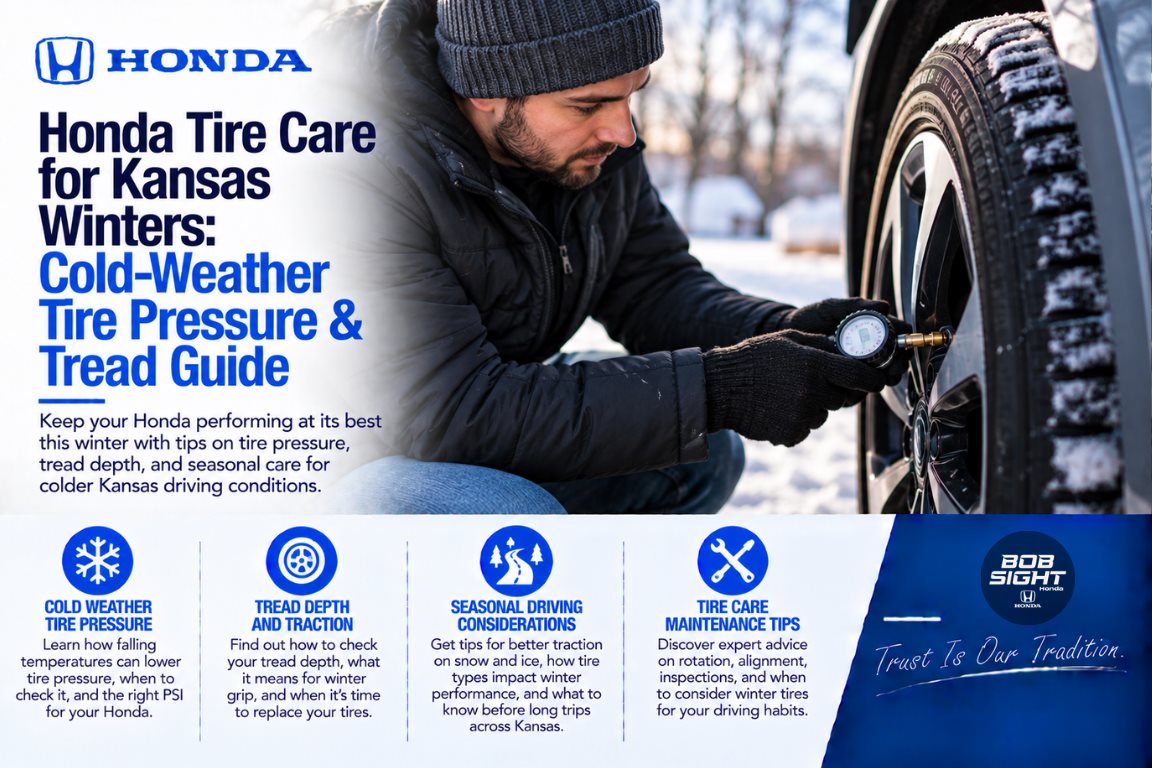
When Midwest temperatures drop below freezing across Eastern Kansas and Western Missouri, proper tire care becomes your primary line of defense on winter roads. At Bob Sight Honda in Lawrence, Kansas, our service center regularly assists drivers from Douglas County, Johnson County, and across the Greater Kansas City area with winter vehicle preparation. Driving along Interstate 70 toward downtown Kansas City, navigating Kansas Highway 10 into Olathe, or traveling through the University of Kansas campus during snowstorms requires optimal rubber flexibility, proper inflation pressures, and adequate tread depth. Cold weather directly impacts tire inflation pressures, reduces rubber compound flexibility, and tests your vehicle's stopping distance on slick or icy pavement. This comprehensive seasonal tire care guide covers cold-weather pressure loss, tread depth testing, winter versus all-season tire performance, wheel alignment dynamics, tire storage practices, emergency winter driving techniques, and routine inspection tips to keep your Honda Civic, Accord, CR-V, Pilot, or hybrid model performing safely all winter long.
To inspect your tires or schedule a winter vehicle safety check, visit our factory-certified Bob Sight Honda service center in Lawrence, KS today. Our technicians provide professional tire rotations, wheel alignments, tread depth checks, and replacement tire installations.
In This Guide You'll Learn
Below is an overview of what this complete winter tire care guide for Kansas Honda drivers covers:
- The physics behind cold-weather tire pressure drops and how ambient temperature shifts affect tire inflation.
- Step-by-step instructions for checking cold tire pressure and locating recommended inflation specifications on your Honda.
- How to measure tread depth using the penny and quarter tests alongside professional depth gauge standards.
- Differences between all-season tires, winter tires, and Three-Peak Mountain Snowflake (3PMSF) rated rubber compounds.
- The critical role wheel alignment, suspension geometry, and routine tire rotations play in maximizing winter traction on K-10 and I-70.
- Detailed analysis of winter tire pressure management for Honda Real Time AWD and two-motor hybrid powertrains.
- Proper tire storage procedures for off-season rubber set preservation.
- Proper tire inspection checklists for identifying sidewall damage, uneven wear patterns, and rubber aging.
- Embedded JSON-LD structured data schema markup for search engine optimization.
1. The Science of Cold Temperatures and Tire Pressure Drops
Sub-freezing winter weather causes tire pressure to drop automatically without any puncture or valve stem leak. According to basic gas laws, air contracts as ambient temperatures drop, decreasing the internal pressure exerted against the inner tire liner.
As a rule of thumb, tire pressure decreases by approximately 1 PSI (pound per square inch) for every 10-degree Fahrenheit drop in outside temperature. For example, if you set your tires to 33 PSI on a mild 60-degree autumn day in Lawrence, and temperatures plummet overnight to 20 degrees Fahrenheit during a Midwest cold front, your tire pressure will drop by roughly 4 PSI down to 29 PSI. Underinflated tires cause the outer tread shoulders to carry excessive load while lifting the center tread away from the pavement. This improper contact patch reduces steering stability, increases stopping distances on wet roads, accelerates outer tread wear, and decreases fuel economy along highway routes like I-470 and US-59.
Additionally, modern Honda models come equipped with a Tire Pressure Monitoring System (TPMS). Indirect TPMS systems monitor individual wheel speed sensors to detect rolling circumference changes caused by low pressure. When ambient temperatures drop severely, the low tire pressure indicator (a yellow tire icon with an exclamation point) lights up on your dashboard. Checking tire pressure promptly when this warning light appears prevents permanent sidewall damage and ensures safe driving conditions.
2. How to Check and Correct Cold Tire Pressure Properly
Checking tire pressure accurately requires taking pressure readings when the tires are cold before driving. Driving even two or three miles generates internal friction heat that expands the air inside the tire, producing an artificially high pressure reading on your gauge.
Follow these five practical steps to adjust tire pressure correctly on your Honda:
- Locate Official Inflation Specs on the Driver Door Jamb: Open the driver door and locate the yellow and white Tire and Loading Information placard on the door pillar. This label lists the exact factory-recommended cold inflation pressure (measured in PSI) for your vehicle's front and rear tires. Do not use the maximum pressure molded into the tire sidewall.
- Check Pressures First Thing in the Morning: Measure tire pressures before driving the vehicle or after it has been parked for at least three hours in a shaded area or garage.
- Use a Reliable Digital or Dial Pressure Gauge: Remove the valve stem cap and press the pressure gauge firmly onto the valve stem until the hissing sound stops. Read the measurement displayed on the gauge screen or dial.
- Inflate to Recommended PSI Levels: Add compressed air using a home compressor or station air pump until the reading matches the placard recommendation. If you overinflate, press the small metal pin inside the valve stem to release excess air.
- Re-Initialize the Honda TPMS System: After adjusting tire pressures, complete a TPMS calibration via your vehicle's touchscreen menu or dashboard control button. Driving for 15 to 20 minutes allows the system to relearn baseline wheel speeds.
3. Measuring Tread Depth: Penny Test, Quarter Test, and Safety Limits
Tread depth determines your tire's ability to evacuate slush, water, and packed snow from beneath the contact patch. As tire tread wears down, channel grooves become shallower, drastically increasing the risk of hydroplaning and increasing stopping distances on icy Kansas roadways.
The table below summarizes tread depth measurements and associated safety recommendations for winter driving:
| Tread Depth Reading | Coin / Measurement Benchmark | Winter Traction & Safety Assessment |
|---|---|---|
| 10/32" to 12/32" | Brand New Tire Spec | Optimal winter traction; maximum channel depth for clearing deep snow and slush. |
| 6/32" to 9/32" | Lincoln's Head Covered (Penny) | Good condition; adequate tread depth for managing routine Midwest winter weather. |
| 4/32" | Washington's Head Covered (Quarter) | Marginal winter traction; snow clearing capability significantly reduced; replacement recommended before severe storms. |
| 2/32" or Less | Top of Lincoln's Head Visible (Penny) | Legally bald and hazardous; extreme hydroplaning risk; immediate tire replacement required. |
Performing the penny test is simple: insert a standard U.S. penny upside down into several tread grooves across the width of the tire. If Lincoln's entire head is visible, your tread depth is at or below 2/32 of an inch, meaning the tire can no longer grip wet or icy roads safely. For reliable winter driving across Douglas County, our technicians recommend replacing tires once tread depth reaches 4/32 of an inch.
4. All-Season Tires vs. Winter Tires vs. 3PMSF Ratings
Understanding rubber compound differences helps you select the best tire configuration for your winter driving requirements. While many Honda models come equipped with all-season tires from the factory, severe cold impacts all-season rubber performance.
Standard all-season tires use rubber compounds designed to perform across a broad temperature range. However, when ambient temperatures drop below 45 degrees Fahrenheit (7 degrees Celsius), the rubber compound hardens, reducing grip on dry and wet pavement alike. By contrast, dedicated winter tires feature specialized flexible silica compounds that remain soft and pliable in sub-zero temperatures, allowing the tread blocks to flex and bite into packed snow and ice.
Key tire categories for Kansas drivers include:
- Standard All-Season Tires: Suitable for mild autumn conditions, but rubber hardens below 45 degrees Fahrenheit, leading to longer stopping distances on icy roads.
- All-Weather Tires (3PMSF Rated): Advanced hybrid tires bearing the Three-Peak Mountain Snowflake symbol. They utilize cold-flexible rubber compounds and dense siping while remaining suitable for year-round driving without seasonal changeovers.
- Dedicated Winter / Snow Tires: Feature aggressive tread patterns, deep slush grooves, and high-density 3D siping. They provide maximum traction on packed ice and snow, making them ideal for high-mileage commuters traveling along I-70 and K-10 during winter months.
5. Tire Pressure Dynamics for Honda Real Time AWD and Hybrid Models
Maintaining matching tire pressures and equal tread depth across all four wheels is exceptionally vital for Honda vehicles equipped with Real Time AWD™ or advanced hybrid powertrains. On modern Honda crossovers like the CR-V AWD, HR-V AWD, and Pilot AWD, the intelligent electronic AWD unit continuously evaluates individual wheel speed signals delivered by ABS wheel sensors. If front and rear tires operate at unequal inflation pressures or exhibit severe variance in tread depth, the rolling outer circumference of each tire shifts slightly.
This rotational circumference mismatch tricks the vehicle's electronic control module into interpreting a false wheel slip condition. In response, the system may unnecessarily engage the rear differential clutch pack on dry pavement along I-70 or K-10, causing unwanted fluid heat buildup and unnecessary mechanical drag on rear driveline components. Maintaining equal cold inflation pressures (matching door jamb specs) across all four positions ensures that the AWD system engages smoothly only when real surface slippage occurs on snow-covered roads.
For Honda hybrid models like the Accord Hybrid, Civic Hybrid, and CR-V Hybrid, cold tire inflation pressures directly impact electric motor regenerative braking efficiency. Underinflated tires increase rolling resistance significantly, forcing the electric traction motor and combustion engine to expend extra energy to keep the vehicle cruising at highway speeds. Furthermore, uneven tire pressure can alter the linear feel of steering-wheel deceleration paddles during energy recovery phases on grade drops near Eudora. Keeping hybrid tires inflated to precise factory recommendations preserves maximum EV mode range and maintains quiet cabin acoustics in freezing weather.
6. Wheel Alignment, Suspension Geometry, and Rotation Practices
Maintaining proper wheel alignment and rotating tires at recommended intervals preserves tread longevity and maximizes winter traction. Front-wheel-drive and all-wheel-drive Honda models deliver power through the front drive axles, placing higher torque and cornering stress on front tires.
Rotating your tires every 5,000 to 7,500 miles (or alongside every Maintenance Minder oil change) ensures even tread wear across all four wheel positions. Even wear allows all four tires to grip the road uniformly during sudden braking or evasive maneuvers on slick pavement near Summit Fair or Iowa Street in Lawrence.
Wheel alignment plays a critical secondary role in winter tire traction. When freeze-thaw cycles create severe potholes across local Kansas roads, hard suspension impacts can knock camber, caster, and toe angles out of factory specification. A tire running with incorrect toe alignment scrubs sideways across frozen pavement rather than rolling straight. This scrubbing action rapidly strips away tread rubber, creates uneven feathered edges, and severely reduces directional stability when driving through highway slush rut lines along I-470.
Additionally, check your tires for these four common visual damage indicators during seasonal inspections:
- Uneven Feathering or Shoulder Wear: Indicates misaligned suspension geometry or worn tie-rod ends, causing tires to scrub sideways against the road.
- Sidewall Bulges or Blisters: Caused by impact damage from potholes along K-10 or curb strikes. A sidewall bulge indicates internal cord damage and requires immediate replacement to prevent a tire blowout.
- Weather Cracking or Dry Rot: Deep hairline cracks appearing along the sidewall or tread grooves indicate rubber degradation caused by age and UV exposure.
- Embedded Debris or Slow Leaks: Inspect tread channels for nails, screws, or gravel wedged into the rubber that can cause gradual pressure loss over long drives.
7. Off-Season Tire Storage Guidelines for Second Rubber Sets
If you swap between dedicated winter tires and summer performance tires on your Honda, storing off-season tires correctly preserves rubber elasticity and prevents sidewall cracking. Rubber is an organic compound that degrades when exposed to extreme heat, direct sunlight, ozone from electric motors, and standing moisture.
To maximize the lifespan of your seasonal tire sets, follow these four storage rules:
- Clean and Dry Tires Thoroughly Before Storing: Wash away accumulated road salt, brake dust, and grime using mild soap and water. Allow the tires to dry completely to prevent moisture buildup inside storage bags.
- Store in Sealed Opaque Plastic Bags: Place each tire inside an airtight plastic storage bag or specialized tire tote, drawing out excess air before sealing. This protects the rubber compounds from environmental oxygen and UV light exposure.
- Keep Away from Heat Sources and Electric Motors: Store tires in a cool, dry, climate-controlled basement or dark garage space. Avoid storing tires adjacent to furnaces, water heaters, or electric air compressors, which emit ground-level ozone gas that breaks down rubber bonds.
- Store Mounted Wheels Stacked; Unmounted Tires Upright: If your tires are mounted on secondary wheels, stack them flat on top of each other or hang them from specialized wall hooks. If the tires are unmounted from wheels, store them standing upright side-by-side on a tire rack, rotating them slightly once a month to prevent flat spots.
8. Winter Driving Safety, Skid Recovery, and Emergency Kits
Combining proper tire maintenance with defensive winter driving habits ensures complete peace of mind on Midwest roadways. Smooth steering, gradual acceleration, and extended following distances prevent loss of traction on icy highway patches.
When driving on snow-covered roads, double or triple your normal following distance behind preceding vehicles to allow extra stopping distance. Avoid sudden braking or abrupt steering inputs, which can break tire friction and induce skidding. If your vehicle begins to skid or slide on an icy patch along US-59, follow these proven skid recovery steps:
- Remain Calm and Avoid Slamming the Brakes: Mashing the brake pedal locks the wheels and prevents the tires from regaining directional traction. Easing off the accelerator pedal smoothly allows the tires to begin rolling again.
- Steer in the Direction of the Skid: Look down the road toward your intended path and turn the steering wheel smoothly in the direction the rear of the vehicle is sliding. As the vehicle straightens out, gently re-center the wheel to avoid fishtailing in the opposite direction.
- Allow Honda VSA System to Assist: Modern Honda models come standard with Vehicle Stability Assist™ (VSA®) with Traction Control. VSA monitors wheel speeds and steering angle, applying brake pressure to individual wheels to pull the vehicle back onto its intended line.
In addition to maintaining healthy tires, keep a winter vehicle emergency kit in your trunk throughout the season. Essential items include a digital tire pressure gauge, a portable 12V air inflator, an ice scraper and snow brush, a flashlight, jumper cables, a warm blanket, and tire traction mats or sand bags for extra drive-wheel grip if you get stuck in deep snow.
Quick Facts: Honda Winter Tire Care Essentials
Below is a quick reference summary highlighting key winter tire care metrics for Kansas drivers:
- Cold Pressure Drop Rate: Approximately 1 PSI drop for every 10-degree Fahrenheit temperature decrease.
- Critical Temperature Threshold: Rubber in standard all-season tires hardens below 45 degrees Fahrenheit.
- Minimum Winter Tread Depth: 4/32 of an inch recommended for safe snow and slush clearance.
- Rotation Interval: Every 5,000 to 7,500 miles (per Honda Maintenance Minder).
- Factory Placard Location: Driver door pillar (lists exact cold PSI specs for front and rear tires).
Why Choose Bob Sight Honda in Lawrence, KS for Tire Care
Bob Sight Honda is committed to keeping drivers across Lawrence, Eudora, Baldwin City, Olathe, and the Greater Kansas City area safe through every Midwest season. As part of the trusted, family-owned Bob Sight Auto Group, our dealership provides complete tire care, transparent pricing, and factory-certified technician expertise.
When you visit Bob Sight Honda for tire service, our technicians check tread depth, inspect alignment geometry, balance wheel assemblies, and verify TPMS calibration. We stock an extensive inventory of major tire brands engineered specifically for Honda vehicles, including Michelin, Goodyear, Continental, and Bridgestone. Schedule your winter tire inspection today using our convenient Schedule Service page or explore current tire rebates on our Service and Parts Specials page.
Helpful Links
Proud To Be Part Of The Bob Sight Auto Group
Bob Sight Honda is proud to be part of the Bob Sight Auto Group, serving drivers across Kansas and Missouri with exceptional automotive sales, financing, and service. Whether you are looking for a new Honda in Lawrence, a Ford in Lee's Summit, or a Kia or CDJR vehicle in the area, our dealership group is committed to providing top-tier customer care at every location.